
























If you’re supporting a friend or family member living with dementia or have someone close going through it, you’re likely to have many questions.
What does the diagnosis mean?
What kinds of changes should you expect?
What’s the best way to communicate when conversations become harder? What kind of care is needed as it progresses?
How can you prepare for medical, financial, and legal decisions while also supporting them?
These questions can easily be answered if you have reliable information you can refer to.
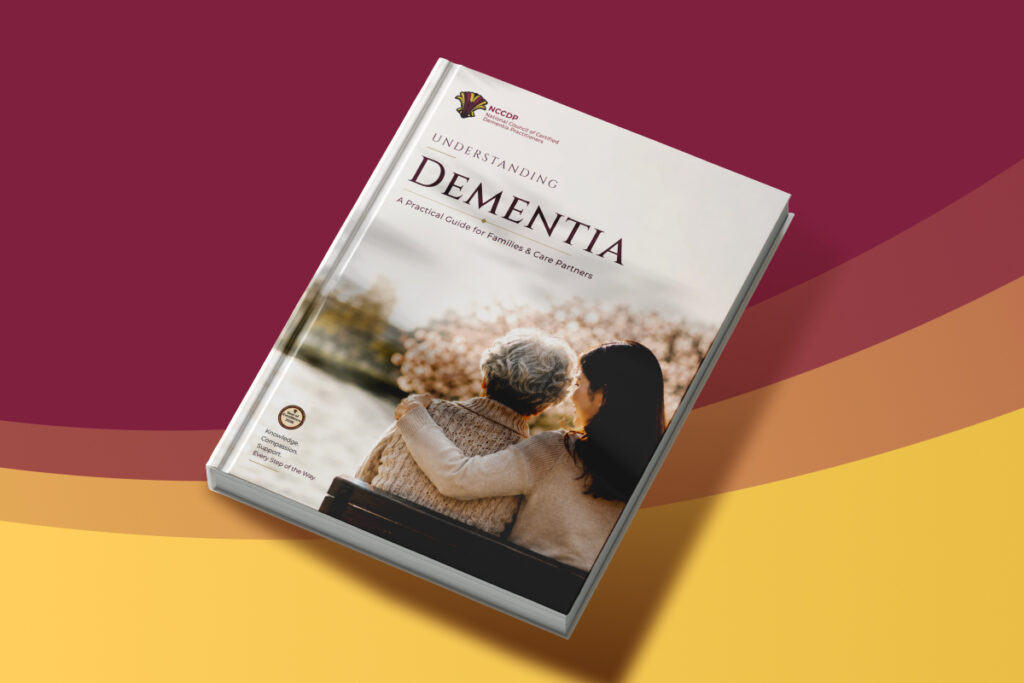
The National Council of Certified Dementia Practitioners (NCCDP) created Understanding Dementia: A Practical Guide for Families & Care Partners. It’s a free, downloadable guide designed for families and care partners who want to understand the dementia journey.
With this dementia guide for families, you’ll learn that every person’s experience with dementia is different and that caring for them can be person-centered every step of the way.
Understanding What Dementia Means
It may take time to know all the ins and outs of a dementia diagnosis.
This guide starts with the basics. What dementia is, how it can affect memory, thinking, communication, and daily living, and how dementia differs from normal aging.
There’s a rundown of the different types too, including Alzheimer’s disease, vascular dementia, Lewy body dementia, and frontotemporal dementia. Knowing which type someone has can help families prepare for what’s ahead. Dementia doesn’t look exactly the same in every person. Plus, symptoms and pace can vary by type.
You’ll also learn how dementia is diagnosed and what to expect during that process, including medical examinations, cognitive assessments, blood tests, imaging, and other diagnostic procedures.
Knowing What to Expect as Dementia Progresses
Supporting someone living with dementia means living with uncertainty. You don’t always know if a change is expected, or what comes next.
This guide walks families through cognitive changes and the different stages of dementia:
- In the early stages, a person may still be largely independent but slowly experience difficulty with memory, finding words, multitasking, judgment, navigation, or familiar activities.
- In later stages of dementia, a person may need more assistance and supervision. This may include confusion, difficulty recognizing friends and family, losing their way, disrupted sleep patterns, difficulty completing everyday tasks, and a higher risk of falls.
Knowing these stages ahead of time helps. You can prepare for care needs as they evolve, instead of facing each new challenge without context.
Care partners can come back to this information as their family member’s needs change over time.
Learning How to Communicate Better
Communication can become challenging as dementia progresses because it affects memory, language, judgment, and the ability to process information.
This guide includes a full chapter on communication, with examples of things to avoid saying and better ways to respond. It explores the importance of using appropriate, respectful language as a way to decrease stress.
This chapter can be especially useful once conversations start feeling hard to follow. You’ll find guidance on answering repetitive questions, confusion, frustration, or other ways a person with dementia may be expressing an unmet need.
The advice here goes beyond definitions, offering practical advice that can help with your day-to-day activities.
Preparing for Care and Important Decisions
Understanding the symptoms is only part of dementia care. Family members will also make decisions about daily care, safety, finances, medical needs, and future plans.
The guide covers tips on how to plan ahead. This includes legal, financial, and medical considerations. It also gives information about finding the right type of care and assistance, activities of daily living, financing dementia care, and when a move is required.
Deciding early gives your family and the care team more time to weigh options together.
The guide also points readers toward national dementia-related support organizations and trusted resources for finding reliable information online.
Creating a Safer, More Supportive Environment
As dementia progresses, changes in judgment, physical ability, awareness, and behavior may create new safety hazards in the home.
This guide includes a section on how to make the home suitable for someone living with dementia. This considers various rooms such as the kitchen, the dining area, the living room, bedroom, and bathroom, along with safety measures.
These recommendations can help families see their homes in a different light and plan ahead as needs change.
Remembering the Care Partner
Caring for someone living with dementia can affect the entire family. Care partners need support too.
This guide includes information on:
- Maintaining your own health and well-being
- Self-care tips, such as taking regular breaks, accepting help, and staying connected with others
- Guidance for day-to-day care responsibilities, including how to coordinate support from friends, family, or a care team
A care partner’s well-being isn’t separate from good care. It’s a part of it. With compassion and the right support, they can face each day with greater preparation and confidence.
A Practical Starting Point for Families
There’s no single guide that can answer every dementia question a care partner will have. Every family’s situation is different, and any medical decision should be discussed with a professional. But having a reliable starting point can make the journey feel more manageable.
Understanding Dementia: A Practical Guide for Families & Care Partners brings together dementia basics, communication tips, stages of cognitive change, care planning, home safety, and care-partner wellness in one place.
Whether your family has just received a diagnosis, you’re observing changes in a relative’s health, or thinking about a family member’s future needs, this dementia guide for families can help.
Download the Free NCCDP Family Guide
If you know someone living with dementia or care for one, you don’t have to navigate every question alone.
Download Understanding Dementia: A Practical Guide for Families & Care Partners from NCCDP for free and explore practical information and resources you can return to throughout the dementia journey.