

























Someone in the budget meeting asks what last year’s dementia education delivered. You have sign-in sheets and completion rates, but you don’t have a clear answer about what changed on the floor.
Your leadership wants evidence, while your team wants support that helps on their next shift. You’re answering to both.
Dementia care training for staff earns its place when you can trace it to results leadership already tracks. The sections below show how to judge return through turnover, quality metrics, and survey results. You’ll also see how to compare seminar and certification options, whether you’re choosing for a few people or a whole community.
Healthcare Training ROI in Memory Care: Tangible vs. Intangible Gains
Some returns land on a budget line. Others are harder to see but protect your census and reputation.
Moving Beyond Check-the-Box Compliance
Start with staff safety. A NIOSH-reported study found that 35% of nursing assistants reported injuries tied to residents’ physical responses during care. In homes with dedicated Alzheimer’s care areas, the figure was 37%. Each injury can become a workers’ compensation claim. Family complaints that escalate to legal review add cost.
Interactive dementia staff training built around real scenarios gives staff something to try on their next shift. A passive video might satisfy a calendar requirement, but it may not change how staff support someone during bathing or mealtime. Pull your injury, claims, and complaint numbers before the first session, so you have a baseline. A 2016 review found insufficient evidence for firm conclusions on interventions for responsive behaviors. Your own data matters more.
Revenue protection is the main intangible return. A systematic review linked symptoms such as anxiety and hitting out to relocation to a nursing home. Track move-outs by reason to see whether unmet needs are driving them. An Ohio analysis of more than 27,000 family members tied family satisfaction to frequent staff communication and staff retention, and that can support referrals.
Cutting Turnover Costs and Building Staff Confidence
Senior living staff turnover belongs in your ROI math. The same NIOSH bulletin reported more injuries among assistants with under 12 months on the job. Each departure brings recruiting, orientation, overtime, and lost productivity while the position sits open. Researchers who study nursing assistants note that much of this replacement cost stays hidden.
Satisfaction also shapes who stays. A federal study compared job satisfaction between certified nursing assistants who planned to leave and those who intended to stay. Staff who feel prepared for hard moments may feel less anxious at work. Test that link in your own data. A milestone such as CDP Certification, covered below, shows staff that their experience and learning count.
Tying Dementia Care Training for Staff to Quality Metrics
Regulators, insurers, and families all use quality metrics to judge whether a community is a safe choice.
Reducing survey deficiencies and citations
Federal rules require nurse aides to complete at least 12 hours of annual in-service that includes dementia management. In Appendix Q, CMS explains how surveyors decide on Immediate Jeopardy (IJ). The decision turns on the likelihood of serious harm. Surveyors also watch how staff respond to expressions of distress. Teach staff to document what happened, what they tried, and how the person responded.
Decreasing psychotropic medication use and falls
When staff can’t find the reason behind distress, medication can become the default response. CMS tracks this through its National Partnership to Improve Dementia Care. The partnership aims to expand non-drug approaches and person-centered dementia care practices.
Staff who notice triggers such as pain, hunger, or fatigue can respond earlier, and the CDC’s STEADI resources offer tools to pair with education. Then track falls alongside medication use. Do the two move together?
Matching dementia-specific education to your metrics
General topics such as infection control don’t teach staff how to support a person living with dementia. The federal training rule (42 CFR 483.95) lists dementia management as its own required topic. It also bases behavioral health education on your facility assessment. Choose topics from it, such as communication and expressions of distress, then link each to a metric like citations, medication use, or falls.
Choosing a Scalable Option That Won’t Break Your Shift Schedule
Every hour a staff member spends in a session is an hour a colleague covers on the floor, and multi-week schedules stretch that coverage thin.
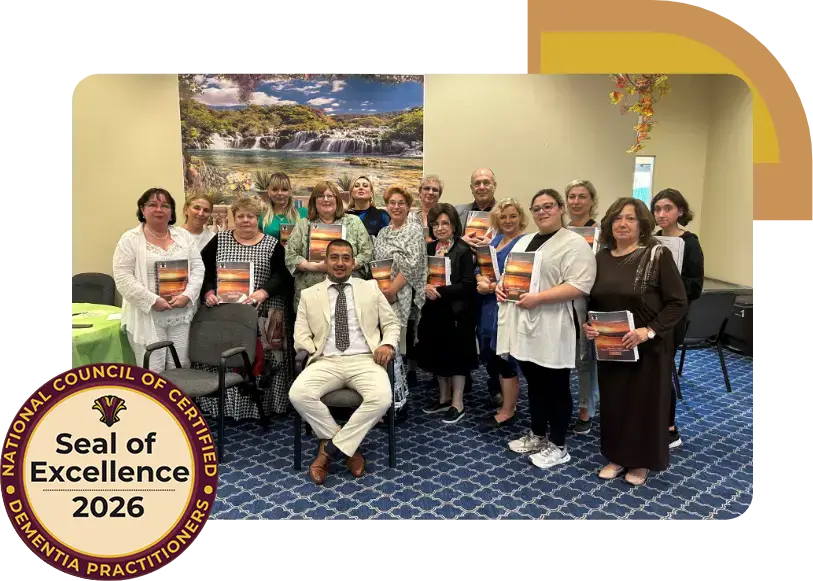
One option is the Alzheimer’s Disease and Dementia Care Seminar (ADDC Seminar). It’s 8 hours of live instruction hosted by NCCDP Certified ADDC Trainers, in person or online. Certified trainers independently set format and price. Some split the seminar into two shorter live sessions, and others run a private seminar for your organization, which can keep practice consistent across communities.
How to compare seminar options
When you request dates and quotes, ask each provider these questions.
- Who presents it, and what are their qualifications?
- Is it live? Can it run in person, online, or privately for your team?
- What does it cost, and what’s included?
- Who accredits any continuing education offered? And how does it fit your state’s required dementia education?
Making the learning stick after the final session
Tie these checkpoints to shifts, onboarding, and supervision.
- At 30 days, supervisors observe two care interactions per staff member and give feedback.
- At 60 days, review incident notes for expressions of distress and the responses tried.
- Check turnover, falls, and medication data against your baseline at 90 days.
Add the ADDC Seminar to onboarding. New hires then start with a common vocabulary.
After the Seminar: Certification for Staff Who Want to Go Further
Certification can give staff a milestone, but options vary. Before you back one, confirm who awards it, what experience applicants need, how renewal works, who accredits the continuing education, and whether leadership and surveyors recognize it.
The Certified Dementia Practitioner® (CDP®) is one option to evaluate that way. NCCDP awards CDP Certification to professionals with at least one year of paid experience working directly with people living with dementia who complete the live, 8-hour ADDC Seminar and meet its documentation requirements.
The seminar comes first. Applicants then submit an application that NCCDP reviews and must approve. Family and unpaid care partners don’t qualify. CDPs renew every two years with 10 hours of dementia-related continuing education.
CDP Certification is a professional credential and not a license. It recognizes specialized training and supports ongoing professional development.
Frequently Asked Questions
How long does dementia care training for staff take to complete?
It depends on the provider and format. Some education runs in a single day, and some spreads across several weeks, so ask each vendor for total hours. In NCCDP, the ADDC Seminar is 8 hours of live instruction, usually in one day. Certified trainers set the format, and some host it as two shorter live sessions.
Can staff attend the ADDC Seminar during work hours?
Often, yes. Communities can treat education as paid time and use overlapping shifts or a dedicated day. The ADDC Seminar can also run as a private seminar for your team.
How do you measure improvement in staff confidence?
Start with a short survey before and after the education. Then track incident notes and de-escalation logs for 90 days against your baseline. Surveys show how staff feel. The logs show what changed on the floor.
Protecting Your Margins With Specialized Education
Strong memory care outcomes can protect your finances and your reputation. Pick options you can defend to leadership, and measure change against your own baseline. A single ADDC Seminar for your leadership team is a practical place to begin.
Register your team for an upcoming ADDC Seminar hosted by a Certified ADDC Trainer. Staff who want to go further can then apply for CDP Certification. NCCDP can tell you about group options for organizations.
