
























![How To Become A Certified Dementia Practitioner [Featured Image]](https://www.nccdp.org/wp-content/uploads/2025/04/Featured-Image-REF017-How-To-Become-A-Certified-Dementia-Practitioner-1024x683.jpg)
You’ve watched a coworker freeze when a person in their care showed signs of distress, and no one on shift knew why. Or maybe that coworker was you. Dementia care asks a lot of the people doing it, and many people in this field learn on the job, one shift at a time. That’s a hard way to build the judgment this work requires.
Becoming a Certified Dementia Practitioner (CDP) offers a structured, recognized path to developing that judgment. This article walks you through eligibility, the exact steps to apply, what it costs, and what changes once you’re certified.
Who Qualifies for CDP Certification
NCCDP’s eligibility rules confirm you bring the real experience and judgment needed to deliver person-centered dementia care. Review the qualifications below to see where you stand.
Professional Backgrounds That Qualify
You don’t need to be a nurse or a physician to qualify. Eligible roles include:
- Nursing (RNs, LPNs, LVNs) and Certified Nursing Assistants (CNAs)
- Social work (LMSWs, LCSWs, BSWs)
- Occupational, physical, and speech therapy
- Activity professionals and recreation therapists
- Administrators and executive directors in long-term care or assisted living
- Mental health professionals, physicians, and physician assistants
- Home health and hospice professionals, case managers, and care coordinators
- Memory care specialists and healthcare educators
Common titles include Director of Nursing, Memory Care Coordinator, Activities Director, and Rehabilitation Therapist. What matters is that your current or recent role involves direct care, support, or oversight for people living with dementia.
Experience Requirements
You need at least one full year of paid experience in a healthcare, social service, or related setting serving people living with dementia. That experience should include direct, hands-on work in assessment, care planning, daily support, or program development for people living with dementia.
This hands-on experience builds the clinical judgment and empathy the certification is designed to recognize.
What else you’ll need
- Educational qualifications: a high school diploma or GED at minimum; many roles require more.
- Letters of recommendation: some applications require a letter from a supervisor or administrator confirming your experience and standing.
- Documentation: gather employment verification, transcripts, professional licenses, and any required letters before you apply.
The CDP Certification Process
Before enrolling, review NCCDP’s eligibility requirements above and line up your documentation early. Application delays almost always come from incomplete paperwork.
Step 1: Complete the ADDC Seminar
You’ll need to complete NCCDP’s Alzheimer’s Disease and Dementia Care (ADDC) Seminar.
Check the NCCDP seminar calendar for sessions in your preferred format and region, and confirm the trainer holds the CADDCT credential, which authorizes instructors to teach the seminar.
The seminar runs about eight hours and is available in three formats:
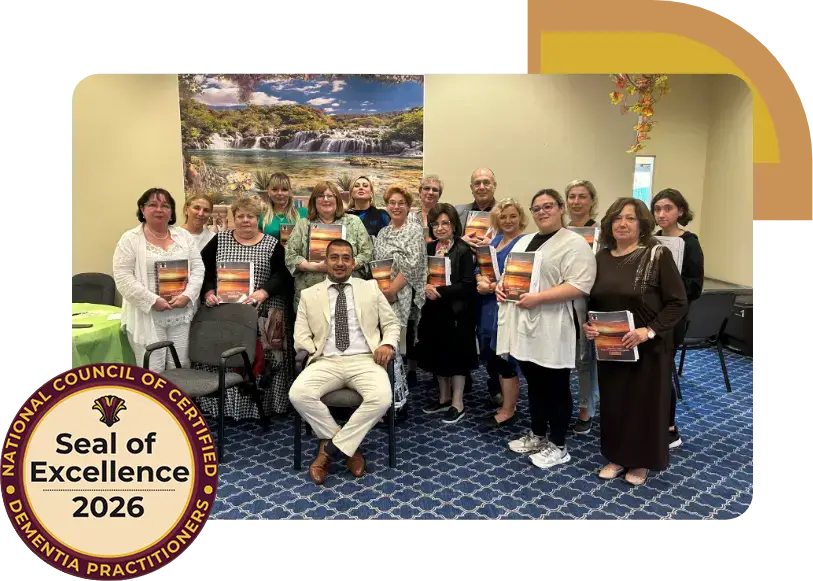
- In-person seminars are typically one full day, eight hours, and offer direct interaction with an instructor and structured peer discussion.
- Virtual seminars cover the same content and structure as in-person sessions, just held live online.
Both lead to the same credential; what differs is the environment and pace.
Watch the time zone listed for each session, since it may not match your own. Also, seminar pricing is set independently by each trainer, so cost can vary by session. Whether you train with NCCDP’s own corporate trainers or NCCDP-approved trainers, you get the same seminar content and the same certificate of attendance.
Some organizations host in-house ADDC Seminars for their staff, led by a CADDCT-certified trainer. Check with your organization’s education or HR department to see if this is available to you.
What the seminar covers
The seminar covers core topics drawn from person-centered dementia care, including:
- Communication strategies for people living with dementia
- Recognizing and responding to expressions of distress
- Understanding dementia progression and its stages
- Supporting family members and care partners
- Sensory stimulation, activities, and meaningful engagement
- End-of-life care and comfort-focused support
Most sessions include knowledge checks, case studies, and applied exercises, so you’ll demonstrate both conceptual understanding and practical application before you receive your certificate of attendance.
Step 2: Submit your CDP application
Once you’ve completed the ADDC Seminar, log in or create an account on NCCDP’s application portal and start your application. You’ll upload your certificate of attendance along with your supporting documentation.
The current application fee is $185, though it’s subject to change.
NCCDP typically reviews completed applications within 24 to 72 hours, so most professionals move from completing the seminar to certification in about one to two weeks. You’ll get an email whether your application is approved or whether NCCDP requests additional information.
CDP Certification is a professional credential, not a license. It doesn’t authorize you to practice beyond your existing professional license or job qualifications.
There’s no certification exam. The approval is based on your completed seminar, application, and supporting documentation.
Renewing Your CDP Certification
Your CDP certification stays active for two years. Renewal costs $185, also subject to change, and requires 10 continuing education hours (CEUs) during that window.
You won’t need to submit proof of those CEUs at renewal time, unless you’re selected for audit. Keep your records for your own files. CEUs can come from any healthcare topic, including staff in-services.
You can complete the entire process online, though NCCDP recommends a desktop or laptop over a phone or tablet. Chrome and Edge tend to work best.
Why Becoming a Certified Dementia Practitioner Is Worth It
Earning the CDP credential builds a documented, evidence-informed foundation you can apply immediately, in whatever setting you work.
It supports career growth
CDP certification signals a real commitment to specialized dementia care, and it opens doors. Certified professionals often stand out for roles such as:
- Memory Care Coordinator or Director
- Dementia Program Manager
- Staff Educator in dementia care
- Unit Manager or Director of Nursing in memory care
- Social Work Supervisor in geriatric or dementia-focused programs
Many organizations recognize CDP certification as a valuable credential for leadership roles in memory care, assisted living, and skilled nursing. It can also support a move into consulting or staff development.
It strengthens the care you provide
Training helps you recognize expressions of distress as communication rather than behaviors to manage. You’ll build individualized care plans that reflect a person’s history, preferences, and abilities.
You’ll also learn non-pharmacological approaches that support well-being without over-relying on medication, and how to foster meaningful engagement and communication as dementia progresses.
These skills can reduce staff burnout, support family involvement, and help you model best practices or lead quality improvement work within your organization.
It benefits the people you care for
Families often look for care teams with specialized dementia training, and CDP certification signals that expertise. For the person living with dementia, care from someone with this training can support daily comfort, communication, and trust.
Research on person-centered care programs shows links to better quality of life and reduced use of psychotropic medication, without an increase in agitation.
It builds professional trust
Certification carries weight with employers, regulators, and the families you work with. Many employers value CDP status in hiring and performance evaluations, and it may affect eligibility for specialized assignments or pay differentials.
The Alzheimer’s Association’s 2026 Facts and Figures report describes growing shortages across the dementia care workforce, driven by a rising number of people living with the disease. Certified staff bring a documented skill set that helps organizations meet that growing need.
NCCDP’s ADDC curriculum is recognized by CMS and listed on the CMS Dementia Care Training Crosswalk.
Frequently Asked Questions About CDP Certification
What are the prerequisites for becoming a Certified Dementia Practitioner?
You need a qualifying healthcare or human services role, at least one year of direct experience with people living with dementia, and a minimum of a high school diploma or GED. You’ll also need supporting documentation, such as a license, transcript, or administrator letter.
How do I complete the training online?
ADDC Seminars are held virtually, live, on platforms like Zoom. You will register for a scheduled session through NCCDP’s calendar. You attend the full eight-hour seminar, then receive a certificate of attendance to submit with your application.
Where can I find an ADDC seminar near me?
NCCDP’s seminar calendar lists sessions by date, format, and trainer, and most now run live over Zoom. Some employers also host in-house ADDC Seminars through a CADDCT-certified trainer, so check with your HR or education department first.
Is CDP certification mandatory?
It isn’t legally required in most settings, but many employers value it as a qualification for memory care, assisted living, and dementia-specific roles.
How long does certification last, and what does renewal involve?
Certification lasts two years. Renewal costs $185, subject to change, and requires 10 continuing education hours during that period. You won’t need to submit proof unless you’re chosen for an audit, though keeping your own records is worth doing.
Can family caregivers become certified?
CDP certification is designed for professionals working in a qualifying healthcare, social service, or long-term care role. Family caregivers aren’t eligible unless they’re also employed in a qualifying professional capacity and meet the other requirements.
How much does CDP certification cost?
The CDP application fee is $185, subject to change. Seminar pricing is set independently by each trainer, so check with your chosen trainer or seminar listing for cost details.
Some employers cover part or all of these costs as staff development. Check with your organization’s education or HR department about available support.
Start Building Your Dementia Care Expertise
Earning the CDP credential reflects real, hands-on skill in person-centered care. It connects you to a wider community of practitioners raising the standard for dementia care.
Becoming a Certified Dementia Practitioner is a clear, attainable path if you’re already working in dementia care. It’s a strong career step whether you’re aiming for a leadership role or want to specialize further in memory care.
Take the next step. Learn more about CDP certification and find an ADDC Seminar that fits your schedule.