




















As an experienced personal care assistant (PCA), you help people bathe, support medication routines, and notice their small changes every shift. Yet your resume may not show how skilled that work is, because routine tasks feel hard to name.
The problem is phrasing, not experience. This guide covers five PCA skills for resume writing that hiring managers look for, with ATS-friendly phrases for each. It also explains how to list certifications and includes before-and-after examples to help you write stronger resume bullets.
Essential Personal Care Assistant Skills for Your Resume
Employers use applicant tracking systems (ATS) to organize and screen resumes. Use clear skill names and relevant keywords from the job posting when they accurately describe your experience. Clear action verbs also help hiring managers understand what you did.
The U.S. Bureau of Labor Statistics projects employment of home health and personal care aides to grow 18 percent from 2025 to 2035, much faster than the average for all occupations. Describing your skills clearly helps employers understand how your experience fits their needs. The five skills below give you a place to start.
1. Activities of daily living and basic care tasks
List the baseline tasks you perform every shift. Examples include bathing, grooming, dressing, toileting support, mobility and transfers, infection control, and help with meals.
Spell out activities of daily living (ADLs) once. After that, use the abbreviation. Both versions can then match. If your role allows it, you can list checking vital signs or giving medication reminders too. Task limits vary by state and employer. List only what you’re permitted to do.
Start each bullet with a clear action verb. Monitored, assisted, documented, and reminded all work. Skip passive phrases like “was responsible for.” A verb shows the work you did. A passive phrase hides it.
Dementia care competence builds on baseline tasks like these. A line like “Assisted six people with morning hygiene and transfer according to their care plans” shows how you apply those skills.
2. Specialized dementia care resume competencies
More people need dementia-informed care every year. The Alzheimer’s Association’s 2026 report estimates 7.4 million Americans age 65 and older live with Alzheimer’s. Without medical breakthroughs, that number could reach 13.8 million by 2060. A dementia care resume shows employers you’re ready for that need.
Phrases like these signal dementia care skill. Adjust them to match your real experience.
- Recognized triggers for late-day restlessness and adjusted routines, lighting, and activities
- Used validation techniques to acknowledge a person’s feelings instead of correcting them
- Looked for unmet needs, such as pain or hunger, behind expressions of distress
- Guided personal care with one-step cues and a familiar routine
- Supported a person seeking an exit by walking alongside them and offering a familiar activity, following their care plan
Looking for causes matters. The CDC points out that some distress responses can be related to undertreated pain or medication side effects. Describing what you noticed and reported shows employers you look beyond the immediate behavior.
3. Empathetic communication and support for responsive behaviors
On its own, “compassionate” tells a hiring manager very little. Show empathy through a specific example. Name the technique, the situation, and, where possible, the result.
The National Institute on Aging suggests making eye contact and calling the person by name. The institute also advises watching your tone and body language. Nonverbal communication can help too, including gentle touch when the person welcomes it.
The Alzheimer’s Association adds that people in later stages may rely more on nonverbal communication, such as facial expressions.
Try phrases like these.
- Eased anxiety during personal care by explaining each step in a calm, steady voice
- Responded to nonverbal signs of distress, such as grimacing or pacing, and reported them to nurses
- Built trust with family members through consistent, respectful updates recorded in the care log
Family members are essential partners in care. Employers want to see that you work well with them. Choose the communication technique you use most and write it as a bullet with the situation and result. These dementia communication tips can help you describe the approaches you use.
4. Time management and care plan adherence
Following the care schedule supports safe, consistent care. Consistent timing for medication reminders and repositioning rounds supports each person’s comfort and health. Punctuality also tells employers you’re reliable.
Show it with specifics. Replace any numbers below with your own.
- Arrived on time for 100% of scheduled shifts over [X] months
- Followed individual care plans for eight people per shift, including medication reminders and repositioning
- Addressed urgent needs first when schedules changed, then returned to routine tasks
Describe how you keep the environment calm, too. Even on a full shift, you can build in time for conversation and choice. Try “Maintained a calm, unhurried routine on full shifts by building in time for conversation.”
5. Advocacy and care team collaboration
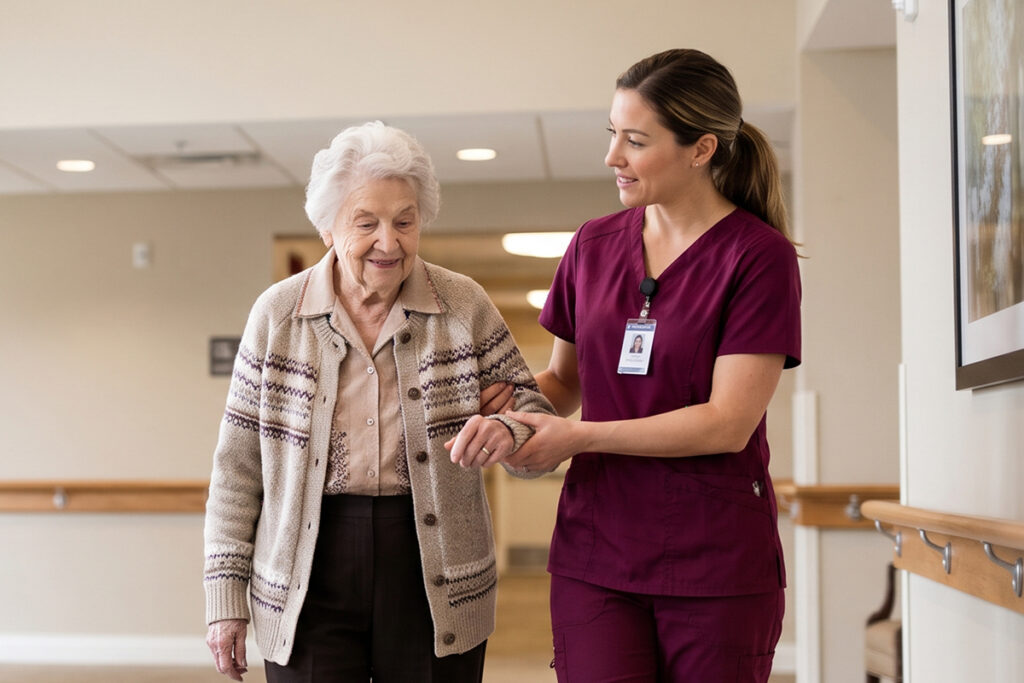
You often spend more time with a person than anyone else on the care team. You’re well placed to notice small changes, such as a skipped meal or a shift in mood. You’re the front-line link between the person, their family, and the broader team.
List both your verbal reporting and your documentation skills. Name the tools you’ve used, such as electronic health records, care logs, or shift notes. Use teamwork language, like “collaborated with registered nurses” or “reported status changes to case managers.” If you’ve advocated for someone’s preferences, such as a favorite meal or bathing time, say so.
How Certifications Highlight Your Specialized Training
A recognized credential adds context to the experience you describe. For dementia care, NCCDP offers CDP Certification, an eligibility-based professional credential rather than a license. On a resume, it points to documented preparation in dementia care.
CDP Certification takes two separate steps:
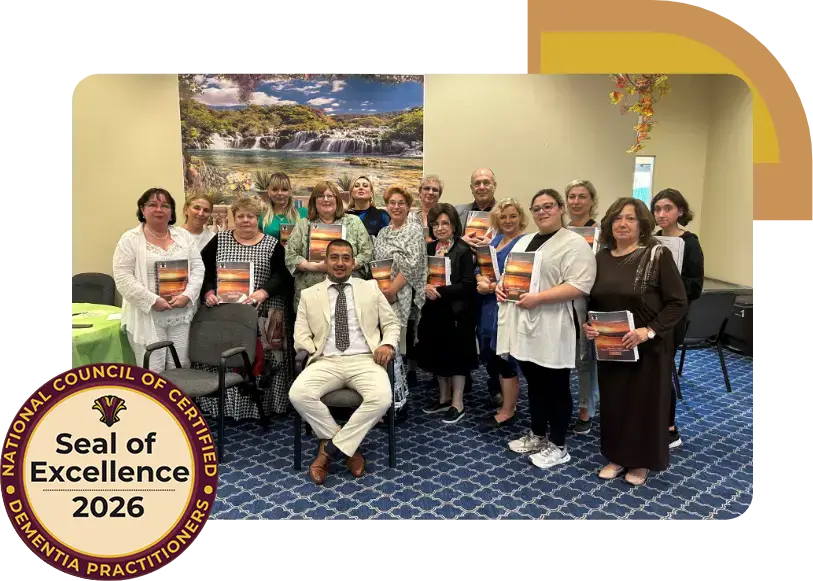
- Complete the ADDC Seminar. The Alzheimer’s Disease and Dementia Care (ADDC) Seminar is the educational prerequisite for CDP Certification. The eight-hour seminar is delivered live, either virtually or in person. Each certified trainer independently sets the seminar’s dates, format, and pricing, so browse the NCCDP events calendar to find one that fits your schedule. The seminar gives you foundational dementia care education and the Certificate of Attendance you need to apply.
- Submit a CDP application. Apply through NCCDP’s website and upload your Certificate of Attendance from the seminar. NCCDP administers certification and reviews complete applications within 24 to 72 hours. Approval is required.
To qualify, you’ll need the following:
- At least one full year of paid experience caring for persons living with dementia
- Direct work with people diagnosed with a form of dementia, such as Alzheimer’s disease
- Documentation, such as a healthcare license or certification, a diploma or transcript, or an administrator letter
An administrator letter is an option when your position does not require a license, certification, or diploma. Applicants must be paid employees in geriatric healthcare. Unpaid family care and private caregiving outside an agency don’t count toward eligibility.
CDP Certification renews every two years and requires 10 CEUs. CEUs may come from any dementia-related education, including staff in-services. List your certification under Certifications and Education as “Certified Dementia Practitioner (CDP), NCCDP” with your certification date.
Sample Resume Bullets Highlighting Your PCA Skills
Strong PCA skills for resume bullets share three traits. A good bullet opens with an action verb and names a specific task. It also shows a result. The numbers below are samples. Swap in your own.
Daily living care
- Before “Helped six clients with bathing and dressing.”
- After “Assisted six people daily with bathing, grooming, and dressing while protecting privacy and choice.”
Dementia care
- Before “Took care of people with memory problems.”
- After “Supported eight people living with dementia using validation and steady routines to ease late-day restlessness.”
Communication with families
- Before “Good with families.”
- After “Gave daily updates to family members and documented concerns, building trust over 14 months.”
Time management
- Before “Always on time.”
- After “Completed 100% of scheduled shifts on time across 14 months, with all medication reminders given on schedule.”
Collaboration
- Before “Worked with the nursing team.”
- After “Reported status changes to registered nurses and case managers, then documented each shift in the electronic health record.”
Frequently Asked Questions About Building a PCA Resume
What certifications should I prioritize on my personal care assistant resume?
Your state or employer may require a license or certification, such as CNA or HHA. List those first. Once your application is approved, add CDP Certification. Employers can recognize professional certifications. CDP Certification isn’t a license, so list it under certifications with your certification date.
How do PCA skill requirements differ between home health agencies and memory care communities?
Home health resumes lean on independent problem-solving and solo time management. Memory care community resumes lean on teamwork. They also show you can support several people at once and ease distress in the moment. Read the job posting, then match your bullets to its setting.
Do I need a formal clinical background to list dementia care skills on a resume?
No. You can list any dementia care skill you’ve practiced on the job, such as validation or responding to distress. Formal nursing school isn’t required. Education such as the ADDC Seminar can deepen those skills, but the seminar alone doesn’t result in CDP Certification. You also need a full year of paid experience working directly with people living with dementia. Supporting documentation and an approved application are required too.
Presenting Your Experience and Certifications Clearly
A strong resume does more than list past tasks. Each line shows the judgment, communication, and person-centered care you bring to every shift. You’ve already done the work. Give it the words it deserves.
Start small. Pick one skill from this guide and rewrite a single bullet today. Use a clear action verb, a specific task, and a result. Then take the rest one skill at a time.
Ready to add CDP Certification to your resume? Start by finding an ADDC Seminar date that fits your schedule.