






















![Signs Your Organization Needs Updated Dementia Awareness Training [Featured Image]](https://www.nccdp.org/wp-content/uploads/2026/08/Featured-Image-018-Improving-the-Quality-of-Dementia-Care-1024x683.jpg)
You noticed a new hire hesitate when a resident repeats the same question, unsure how to respond. Then you see experienced staff become frustrated in situations they once handled confidently. These moments often point to a larger issue: whether your dementia education program is keeping pace with the needs of your residents and care teams.
Nearly 44% of assisted living residents live with Alzheimer’s or another form of dementia, and the number keeps climbing. Every year, that growth adds more pressure on care teams already stretched thin. When your team’s knowledge hasn’t kept up with those expectations, gaps often appear through rising incident reports, frustrated families, and staff who feel less confident seeking guidance.
Improving the quality of dementia care starts with recognizing when your team’s education no longer matches current resident needs. Below are the operational signs that point to outdated dementia education, along with practical steps for assessing and strengthening your approach.
The Role of Ongoing Education in Improving the Quality of Dementia Care
Onboarding is only the beginning. Effective dementia training for staff must continue evolving as resident needs, regulations, and evidence-based practices change. When training stalls, so does the quality of care your team can realistically provide.
How it shapes resident outcomes
Staff who receive current dementia education are better equipped to recognize early signs of distress or unmet needs, which leads to faster, more appropriate responses.
A large nursing home trial found that staff training in person-centered care significantly reduced residents’ distress responses and overall neuropsychiatric symptoms.
Training also influences how residents experience their day, a benefit that’s harder to measure but just as important. Staff who understand a resident’s communication style, history, and preferences can adapt in the moment. It protects a resident’s dignity and sense of autonomy – core elements of quality dementia care.
What regulators expect
Surveyors increasingly look for evidence that your team can apply dementia-specific knowledge. Expect them to observe how staff interact with residents, review care plans for individualized language, and check documentation for consistency with best practice.
Outdated training often surfaces in these reviews. Citations related to dementia care can affect licensure, funding eligibility, and your organization’s standing with families and referral sources.
The Alzheimer’s Association’s 2018 Dementia Care Practice Recommendations outline 56 recommendations across areas like staffing, communication, and care transitions. They give your team a concrete benchmark for what current, person-centered care should look like.
Staying current as research evolves
Dementia care research moves quickly, and approaches considered standard five years ago may now be outdated or even counterproductive. Ongoing education keeps your team’s skills aligned with current best practices, not what was taught during onboarding years ago.
Organizations that prioritize ongoing dementia education can create stronger feedback cultures, where staff feel more comfortable sharing observations and seeking guidance before challenges escalate.
Reviewing dementia caregiver skills and clinical competencies on a regular basis can help you spot where your team’s knowledge has started to lag behind current recommendations.
7 Signs Your Organization Needs Updated Dementia Awareness Training
Some signs are loud, but others are easy to miss until they’ve already affected your staff and the people you care for. Here’s what to watch for.
More frequent distress responses from residents
A rise in distress responses, exit-seeking, or instances where a person declines assistance with care often means staff are missing the earlier signals that a person is expressing an unmet need. When training hasn’t kept pace, staff may default to reactive responses instead of investigating the cause.
What to do:
- Review recent incident reports to spot patterns over time (beyond isolated events).
- Hold case discussions where staff can talk through specific situations and explore what else might have worked.
- Reinforce root-cause thinking, asking what the behavior is communicating before deciding how to respond.
A rise in complaints from residents and families
More complaints, especially ones involving communication or a perceived lack of respect, often point to weak spots in how staff are trained to interact with people living with dementia. People notice quickly when their friend or family member isn’t being heard or understood.
What to do:
- Track complaint themes over time instead of addressing each one in isolation.
- Train staff on validation techniques and active listening.
- Set up regular, honest conversations with families so small concerns surface before they escalate.
Higher staff turnover and visible burnout
When staff doesn’t feel equipped to handle the realities of dementia care, stress builds quickly. That stress is one of the most common, and most preventable, drivers of turnover in memory care settings.
What to do:
- Ask departing staff directly whether they felt prepared for the dementia-related demands of their role.
- Pair newer staff with experienced mentors for their first several months.
- Build in regular check-ins focused on confidence and stress alongside performance.
Outdated or generic care plans
Care plans that read the same for every resident, or rely heavily on medication rather than individualized strategies, are a strong signal staff needs updated guidance on person-centered planning.
What to do:
- Audit a sample of care plans for evidence of individualized approaches.
- When plans are created or revised, bring in input from nursing, activities, dietary, and other disciplines.
- Update templates and protocols to reflect current, non-drug-first approaches to care.
Compliance issues or difficult survey results
Deficiencies tied to dementia care rarely come out of nowhere. They usually reflect a slow drift between what staff were originally taught and what current standards require.
What to do:
- Look for the root cause behind any citation, not just the immediate fix.
- Use survey feedback as an ongoing guide for targeted education.
- Build dementia-specific competency checks into regular performance reviews.
Low participation in meaningful activities
If activity participation has dropped, or programming feels repetitive, staff may need more guidance on adapting engagement to different cognitive levels. It isn’t just an activities department issue. Every staff member who interacts with residents plays a role.
What to do:
- Give staff simple tools for assessing what a resident is still able to enjoy and do.
- Share examples of activities that can flex across a range of cognitive abilities.
- Encourage collaboration between nursing, activities, and dietary staff so engagement isn’t siloed.
Staff openly admitting uncertainty
Direct feedback, staff surveys, or informal comments that express uncertainty (such as “I’m not sure what to do when…” or “I wish I knew how to handle…”) are strong indicators that additional training and support are needed. Empowering staff with up-to-date education builds confidence and improves care quality.
What to do:
- Regularly solicit staff feedback on training needs and challenges faced in dementia care.
- Create safe spaces for staff to share concerns and seek guidance.
- Recognize and celebrate staff achievements as knowledge and skills grow.
Steps to Assess and Update Your Organization’s Dementia Training
Spotting these signs is the first step. Here’s how to turn what you’ve noticed into a clear plan for improvement.
1. Start with a real needs assessment
Before choosing new training, figure out where the current one is falling short.
- Review incident reports, survey findings, and staff feedback for recurring patterns.
- Observe actual care interactions and review documentation.
- Ask staff directly, through anonymous surveys if needed, where they feel least confident.
- Check current practices against regulatory expectations and evidence-based standards.
Repeat this process regularly, and always after a major shift in resident population or regulatory requirements.
2. Choose evidence-based education
Not all dementia education is created equal. Look for content grounded in current research and aligned with person-centered principles.
- Prioritize material that builds both foundational knowledge and applied skills, like communication techniques and behavioral response.
- Confirm the content reflects current, non-drug-first approaches to care.
- Favor interactive formats like case studies or scenario-based learning over passive lecture formats.
- Check for endorsement or alignment with recognized organizations in the field, such as NCCDP or the Alzheimer’s Association.
3. Involve the whole team
Dementia care isn’t a nursing-only responsibility. Everyone who interacts with residents, from dietary to housekeeping to leadership, shapes the resident experience.
- Schedule sessions across shifts so no team is left out.
- Encourage cross-department participation so knowledge doesn’t stay siloed.
- Involve family liaisons or volunteers where it makes sense for your community.
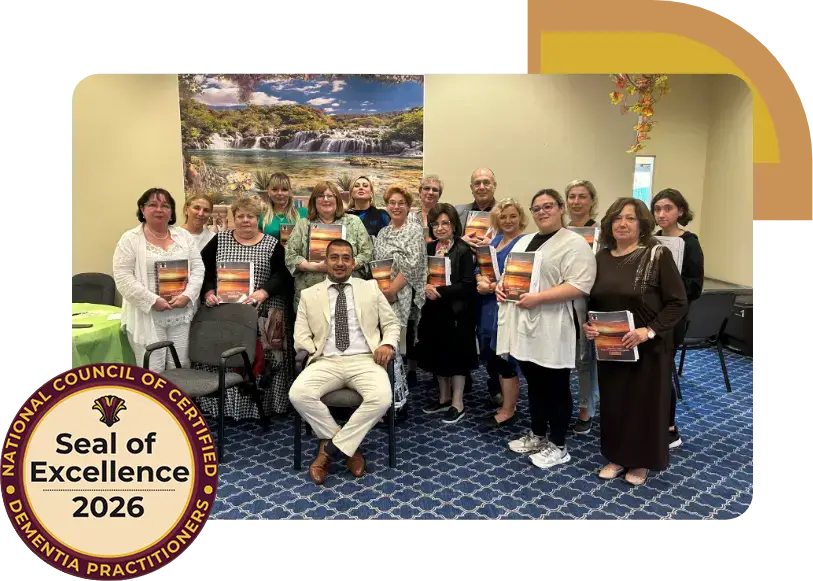
Organizations training 10 or more staff members at once may also want to ask about NCCDP’s corporate group rate for the ADDC Seminar. Each employee still applies individually and goes through the approval process for CDP Certification.
4. Measure the results
Education only matters if it changes outcomes. Set clear markers before you start, and check them again after.
- Track incident rates, satisfaction scores, and compliance metrics before and after training updates.
- Ask staff and families whether they’ve noticed a difference.
- Use what you find to refine your approach on an ongoing basis.
What Your Team Gains From Updated Dementia Care Training
Updated training pays off across your entire organization. Here’s what changes when your team’s education keeps pace:
- Stronger communication and fewer misunderstandings with residents and families
- Fewer incidents, since staff catch and address distress earlier
- Higher retention, as staff feel more confident and supported
- Better outcomes and more dignity for the people you care for
NCCDP’s certification pathways are built to support this kind of consistent, person-centered growth across your team.
Frequently Asked Questions
What are the most common signs that our organization’s dementia training is outdated?
The clearest signs are operational. Watch for rising distress incidents, more complaints from families, high turnover among dementia care staff, generic or unchanged care plans, and staff who openly say they feel unprepared. Any one of these is worth investigating. Several appearing together is a stronger signal that it’s time to update your approach.
Why is dementia training important for improving resident care quality?
Improved training gives staff practical tools that show up immediately in daily care. Communication improves, distress incidents become less frequent, and care plans become more individualized. Residents experience more dignity and engagement, and families notice the difference in the care their friend or relative receives.
Who in our organization should participate in dementia awareness training?
Everyone who has contact with residents should be included, from CNAs and nurses to activity professionals, social workers, dietary and housekeeping staff, administrators, and volunteers or family liaisons where applicable. Person-centered care depends on a consistent approach across every role.
How often should we update our dementia education approach to stay effective?
Plan for comprehensive education during onboarding, with refreshers at least annually for existing staff. Add updates whenever regulations change, new evidence emerges, or your resident population shifts significantly. Ongoing in-services and informal case reviews help reinforce learning between formal updates.
What should a strong dementia education approach include?
Look for content grounded in current evidence, with a clear focus on person-centered communication and behavioral response. Scenario-based learning, coverage of ethical and cultural considerations, and built-in ways to check staff competency all point to a stronger approach. Flexibility to fit your organization’s specific roles and needs matters too.
Give Your Team The Dementia Care Training They Need
Neither the new hire who stalled out nor the longtime staff member who’s grown short-tempered needs to stay stuck there.
Recognizing these signs early gives your organization the chance to act before small issues become bigger ones. Rising incidents, staff turnover, and family complaints all point back to the same root cause – your team needs current, person-centered dementia education to do their best work.
If your organization is ready to move beyond internal training and pursue formal certification, get started with the required ADDC Seminar, the first step toward earning your team’s CDP Certification.