


















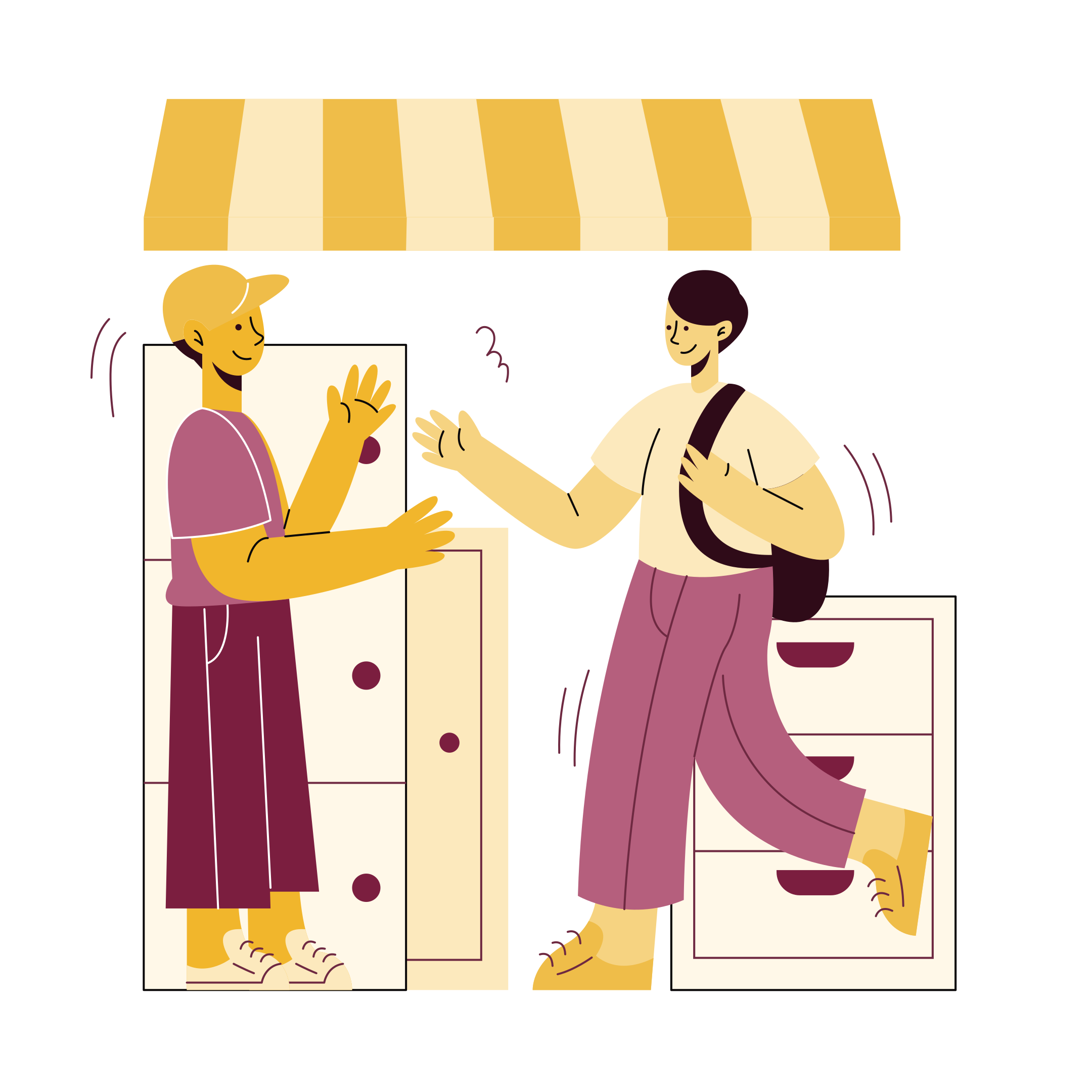





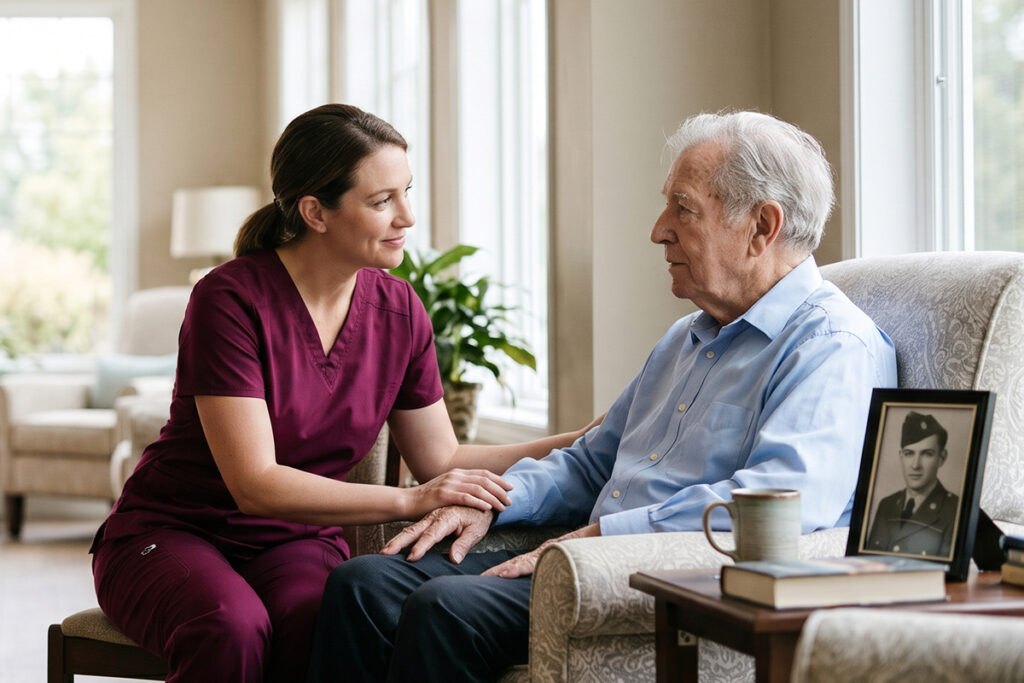
A veteran living with dementia stands in the doorway and doesn’t let you come closer. This can mean communicating something that feels unsafe. When your standard approach is unsuccessful, it may be best to consider that this behavior may have a specific trigger.
Because of their service, veterans have a different background story. They may have faced trauma, physical injury, and toxic exposure, which can affect cognition and how they read a care setting long after discharge.
Veteran dementia care responds to that history. The approach and care techniques are also different if you’re a CNA, a nurse, an administrator, or a VA liaison.
Why Veterans May Face a Higher Risk of Dementia
With any person living with dementia, a change in how they act often points to an unmet need such as hunger, fatigue, or fear. For a veteran, however, that need may be caused by service-related exposures.
How military service can affect cognitive decline
Ask about any history of head injury, including mild injury, and include the veteran’s spouse or family members in the conversation. In a study of more than 350,000 veterans, even mild traumatic brain injury (TBI) was tied to more than double the dementia risk.
PTSD adds chronic stress. A VA database study found more dementia diagnoses among older veterans with PTSD (10.6% versus 6.6% over seven years). As a member of the veteran’s care team, chart head injury and PTSD as history to ask about, since the studies show association, not cause.
Vietnam-era veterans with presumed Agent Orange exposure were nearly twice as likely to receive a dementia diagnosis. Ask about burn pit exposure, which affected veterans who served in Iraq, Afghanistan, and other areas of Southwest Asia.
Telling late-onset PTSD apart from dementia symptoms
Paranoia, poor sleep, and irritability can come from either condition, and clinicians describe a clouded picture in combat veterans. Build a timeline:
- When did sleep changes begin?
- Did startle responses come before memory changes?
- Do they cluster around noises or nighttime?
Pair that timeline with the military history and hand it to the diagnosing clinician.
A veteran’s startle response or night-time fear can be mistaken for a symptom that needs medication. FDA labeling warns that older adults with dementia-related psychosis face an increased risk of death on antipsychotics. Ask the prescriber to review the full history before a new sedative or antipsychotic is started.
Implementing Trauma-Informed Veteran Dementia Care
A veteran covers their ears when the dining room fills with clatter and raised voices. Instead of asking what’s wrong with this person, ask what this person has been through. The answer tells you how to respond and what to change in the environment.
Responding to flashbacks and late-day restlessness
Late in the day, fatigue can leave a veteran sure they are somewhere dangerous. A long-term care community can look like a combat zone. Respond to the fear, and skip the argument about where they are.
- Approach from the front, at eye level, with a calm voice.
- Name the feeling. Try “The noise was loud. You’re safe here, and I’m staying with you.”
- Offer a quiet space, and lower the noise and light.
Sometimes a person hits out or pushes past you. Read that as a survival response. Step back, keep your hands visible, and avoid blocking the doorway. Then document it plainly, such as “pushed past staff toward the door during the alarm test.”
Changing the environment to prevent retraumatization
An alarm test at 4:45 p.m. can sound like an attack to a veteran already worn out from the day, so schedule tests for mid-morning.
- Where code allows, use silent visual strobes instead of sirens. Check with your safety officer first.
- Keep hallways clear of carts and linen bins so no one feels trapped.
- Camouflage, olive drab, and dark navy solids may read as military gear to a person living with dementia, so consider other colors for staff clothing.
Navigating VA Services and Clinical Documentation
If you’re a nurse director, administrator, or anyone handling VA paperwork for a veteran in your community, you might also be responsible for coordinating VA services and documenting their needs.
The Community Care Network (CCN) is VA’s network of community providers. Private memory care communities and home health agencies can partner with VA, and clear documentation shows VA examiners what help a veteran needs and when.
Aligning care with VA health care guidelines
To join CCN, contact the third-party administrator for your region. VA uses a Veteran Care Agreement in limited cases where CCN does not cover a service or cannot supply enough of it. Contact your nearest VA medical center, which decides whether one is needed and helps you start the process.
Enrolled veterans who meet the clinical criteria may receive Home Based Primary Care (an in-home team), Adult Day Health Care (care during the day), and respite care (a break for the family care partner).
When a veteran leaves a VA hospital for your memory care community, request the discharge summary and medication list. Also ask for the military history (branch, deployment dates, and any combat or toxic exposure).
Best practices for clinical claims documentation
- Chart in plain terms. Write the help needed as you saw it, such as “needed help eating at lunch.”
- Record ADLs and IADLs. A physician or nurse director should record what help the person needs with activities of daily living (ADLs) and instrumental ADLs (IADLs), how often, and at what time of day.
- Know the form. VA Form 21-2680 supports Aid and Attendance, an added benefit paid with VA pension, and special monthly compensation for service-connected disability. The form asks examiners for help with bathing, eating, and dressing.
- Link the diagnosis to service. Providers often write a medical opinion, sometimes called a “nexus letter,” that VA can consider as evidence by explaining how a service-connected condition such as PTSD connects to the diagnosis.
- Cite your timeline. Point to the timeline your team built, such as when sleep changes and when reactions to noise started, and stay with what the record supports.
Education for Staff Who Care for Veterans
Whether you’re choosing education for yourself or building the learning budget for a team, look for education that helps care teams spot early distress and respond before it escalates. Federal nursing home rules require dementia management education for staff, and veteran-specific learning can build on that base.
Veteran-centered learning for care teams
General dementia education often centers on civilian histories, and military trauma responses can get little attention. Veteran-specific education matters because the gap shows up in daily care:
- Missing history. Staff who aren’t taught to ask about military service may never learn what shaped a veteran’s reactions.
- Documentation gaps. Staff unfamiliar with VA processes may leave out details examiners need.
- Staff strain. Burnout feeds staff turnover, which breaks the relationships veterans rely on, and staff who learn to read a trauma response have more to work with on a hard shift.
CDP Certification for eligible professionals
Asking about a person’s history is a core part of person-centered dementia care. For professionals who want to continue their dementia care education, NCCDP offers Certified Dementia Practitioner (CDP) Certification, which recognizes specialized training in dementia care.
The CDP is not a license. It is awarded to professionals with at least one year of paid experience working directly with people living with dementia. First, they complete the live, 8-hour Alzheimer’s Disease and Dementia Care (ADDC) Seminar led by an NCCDP-certified trainer. Then they submit an application with documentation and wait for approval. CDPs renew every two years with 10 hours of dementia-related continuing education.
Veteran Dementia Care FAQs
How do VA dementia benefits coordinate with Medicare or private long-term care insurance?
They work as separate coverage sources. VA covers care it provides or authorizes for enrolled veterans, while Medicare and private policies follow their own rules. A VA social worker can map which one pays for each service, including assisted living.
Which cognitive screening tools are commonly used with military veterans?
Common starting points include the Montreal Cognitive Assessment (MoCA) and the Saint Louis University Mental Status (SLUMS) Examination. Read results alongside PTSD, brain injury, and sleep history, which can affect performance. Note what the person did during testing, such as watching the door.
How can rural memory care providers access VA telehealth?
Start with the veteran’s VA medical center. VA’s Office of Rural Health supports Clinical Resource Hubs, which bring specialist visits to rural veterans through virtual care.
Next Steps in Veteran Dementia Care
Veteran dementia care starts with one question at the bedside: what has this person been through? Let the answer guide how you respond, what you change in the environment, and what you document.
If you have at least one year of paid experience working directly with people living with dementia, your next step is the ADDC Seminar. Then submit your application for CDP Certification, subject to NCCDP’s review and approval.
