























![RiverWoods Durham Joins the Memory Care Excellence Network [Featured Image]](https://www.nccdp.org/wp-content/uploads/2026/09/Featured-Image-RiverWoods-Durham-1024x683.jpg)
Hospice Austin and Austin Palliative Care have officially been awarded the Memory Care Seal of Excellence by the National Council of Certified Dementia Practitioners (NCCDP), joining the Memory Care Excellence Network (MCEN). The designation recognizes organizations nationwide that demonstrate an exceptional excellence in dementia care by combining evidence-based clinical practice with compassionate, person-centered support.
Serving Central Texas since 1979, Hospice Austin is a non-profit hospice and palliative care organization that supports individuals living with Alzheimer’s disease and related dementias, and the families who care for them.
Care That Meets People Where They Are
RiverWoods Durham has been awarded the Memory Care Seal of Excellence by the
National Council of Certified Dementia Practitioners (NCCDP), joining the
Memory Care Excellence Network (MCEN).
The award recognizes the team’s ongoing commitment to clinical education across every role in dementia care.
RiverWoods Durham is part of the RiverWoods family of Continuing Care Retirement Communities, offering independent living, assisted living, memory support, and skilled nursing care.
Its Memory Support neighborhood uses a household model designed to keep daily life familiar for people living with Alzheimer’s disease and related dementias, while giving families confidence that trained staff are close by.
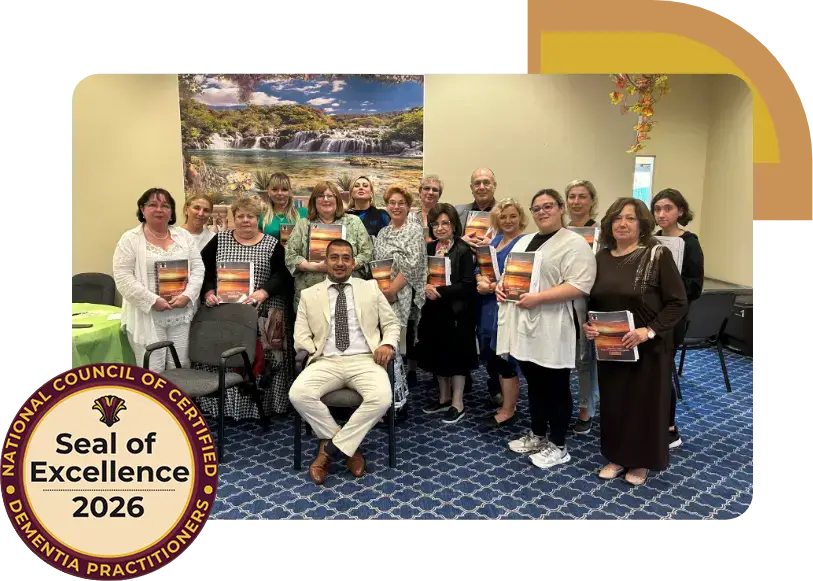
RiverWoods Durham backs that confidence with ongoing education for its staff. The community’s in-house NCCDP-certified trainer recently delivered the
ADDC Seminar
(Alzheimer’s Disease and Dementia Care Seminar), the educational program leading to NCCDP’s
Certified Dementia Practitioner (CDP)
certification.
The Clinical Team’s Experience With the ADDC Seminar
RiverWoods Durham’s Director of Health Services has watched the ADDC Seminar sharpen how her clinical team communicates.
“The clinical team has a new level of confidence and a shared language since the CDP trainings. The residents and families take pride in the extra work and training we have done surrounding dementia training.”
— Jennifer A. Szatko, RN, Director of Health Services
For the nursing staff working directly with people living with dementia, the seminar added new tools to what they use every day.
“Class provided better communication strategies and techniques to care for people living with dementia.”
— Casey Weimar, LPN
“I learned how to better provide comfort and support for the residents and family.”
— Joyce Lyons, MNA
Even staff with decades of hands-on experience found new ways to deepen what they already knew.
“There was a lot that I learned. I have been doing this for 20+ years, and I can’t tell you everything that I didn’t know.”
— Elizabeth Mills, MNA
Life Engagement Joins the ADDC Seminar
The seminar wasn’t exclusive to the nursing team. RiverWoods Durham’s Life Engagement team took part too, led by their own manager, a
CADDCT
(Certified Alzheimer’s Disease and Dementia Care Trainer).
“Teaching the classes allowed me to connect with the nursing staff and build a collaborative partnership between Nursing and Life Engagement, raising the level of our resident-centered care for those living with dementia and strengthening support for their families.”
— Linda Bresnahan, CADDCT, Community Life Engagement Manager
What This Recognition Means for Families
For families considering memory support at RiverWoods Durham, the Seal of Excellence means something concrete. It signals that the team caring for their family members keeps its dementia care knowledge current through continuing education.
That shows up in small moments. A care partner notices early signs of distress and responds before they escalate. A nurse explains a diagnosis to a family member in plain language. Small moments. But for families in the middle of a dementia journey, they add up to something much bigger.
Learn more about RiverWoods Durham and its Memory Support neighborhood at
riverwoodsnh.org/durham.