


























Creating meaningful activities for people living with dementia is not about “keeping someone busy.” It is about supporting identity, purpose, comfort, and connection.
The best activities are person-centered: they reflect the person’s history, preferences, strengths, routines, culture, and current abilities. A person who loved gardening may still enjoy sorting seed packets, watering plants, or arranging flowers. A former teacher may enjoy reading aloud, organizing materials, or helping with a simple “lesson” for grandchildren. When activities are personalized, they can reduce distress, support dignity, and create more moments of success.
Montessori-informed approaches can be especially helpful because they focus on:
- Remaining abilities
- Independence and choice
- Hands-on engagement
- Meaningful roles
- Prepared environments that set people up for success
In other words, activities work best when they feel like real life – not tests.
Start With the Person, Not the Task
Before choosing an activity, ask:
- What has this person always enjoyed?
- What roles have been important to them (parent, nurse, mechanic, musician, host, gardener)?
- What time of day are they most alert?
- Do they prefer social interaction or quiet one-on-one time?
- What sensory experiences are calming or enjoyable (music, touch, scent, movement)?
- What abilities are strongest right now (verbal, visual, physical, rhythm, routine, sorting, storytelling)?
This shift is the heart of person-centered care: we adapt the activity to the person, not the person to the activity.
Montessori-Informed Activity Principles
Montessori-informed dementia care offers a practical framework for creating successful engagement. A few key principles:
1. Break tasks into simple steps
A task like folding towels may be easy for one person and frustrating for another. Offer one step at a time if needed.
2. Use visual cues
Show the activity, not just verbal instructions. Demonstration often works better than explanation.
3. Invite choice
Offer two options instead of asking broad questions: “Would you like music or a puzzle?” and “Do you want to sort cards or help fold napkins?”
4. Use real, familiar materials
People often engage more with everyday objects than with childish or generic activity supplies.
5. Emphasize success
Choose activities with a high chance of completion and a clear purpose.
6. Support a role
People living with dementia still want to contribute. Activities that involve helping, organizing, welcoming, or creating often feel more meaningful.
Activity Ideas by Interest and Strength
Below are person-centered, Montessori-informed ideas you can adapt for home, adult day programs, assisted living, memory care, or skilled nursing.
1) Household and Helping Activities
- Folding towels or washcloths
- Sorting socks by color or size
- Matching lids to containers
- Setting the table (with placemats or picture cues)
- Wiping tables
- Organizing a drawer of safe items
- Polishing silverware (plastic or real, depending on safety)
- Sorting coupons, recipe cards, or mail
- Filling a basket with napkins for meals
Why it works: These activities connect to lifelong habits and roles. They support identity and contribution.
2) Music and Rhythm Activities
- Personalized playlists (favorite era, artist, faith music, cultural music)
- Singing familiar songs together
- Simple percussion (shakers, tambourines, rhythm sticks)
- Chair dancing or gentle movement to music
- Music-and-memory storytelling (“This song reminds me of…”)
- Hymn circles or spiritual music sessions
Montessori-informed tip: Use labeled music stations or choice cards with pictures (for example: jazz, country, church music).
3) Life Story and Reminiscence Activities
- Looking at family photos (printed albums often work better than phones)
- Sorting old postcards or greeting cards
- Memory boxes (items tied to hobbies, career, travel, family)
- “This is my story” boards with pictures and simple captions
- Conversation starters based on themes like first job, favorite holiday traditions, school days, cooking, military service, or music from young adulthood
Important: Avoid pressuring someone to “remember correctly.” The goal is connection, not accuracy.
4) Sensory Activities
- Hand massage with preferred lotion
- Soft blankets or textured fabric boards
- Aromatherapy (if tolerated and allowed)
- Flower arranging
- Water play (washing produce, floating flowers, warm water hand soak)
- Fidget items (sensory aprons, textured objects, worry stones)
- Nature walks or patio time
Why it works: Sensory activities can support comfort when words are harder to find.
5) Montessori-Informed Cognitive and Fine Motor Activities
- Sorting cards by color, suit, or category
- Matching picture cards (tools, animals, foods)
- Sorting buttons, beads, or objects by size/color
- Jigsaw puzzles with clear images
- Pegboards or stacking tasks
- Word matching (for people who enjoy reading)
- Sequencing picture cards (making coffee, planting flowers, washing hands)
Tip: Keep materials visible, organized, and easy to access. The setup matters as much as the activity.
6) Creative and Expressive Activities
- Watercolor painting
- Coloring (adult designs or simple bold images)
- Clay or soft dough
- Collage with magazines and family-safe photos
- Seasonal crafts (wreaths, cards, decorations)
- Poetry reading or simple poem creation
- Faith-based creative projects (prayer cards, scripture art)
Person-centered note: Focus on the experience, not the finished product.
7) Movement and Physical Activities
- Walking groups
- Chair yoga or stretching
- Balloon toss
- Soft ball games
- Guided movement to music
- Gardening tasks (watering, potting, harvesting herbs)
- Simple work activities like carrying a basket or delivering items
Montessori-informed angle: Build movement into meaningful roles (delivering mail, helping set up an activity, watering plants).
8) Social and Role-Based Activities
- Welcoming others at the door
- Handing out snacks or napkins
- Reading aloud to children or peers
- Caring for a doll or stuffed animal (when it aligns with preference)
- Pet visits or helping brush a therapy dog
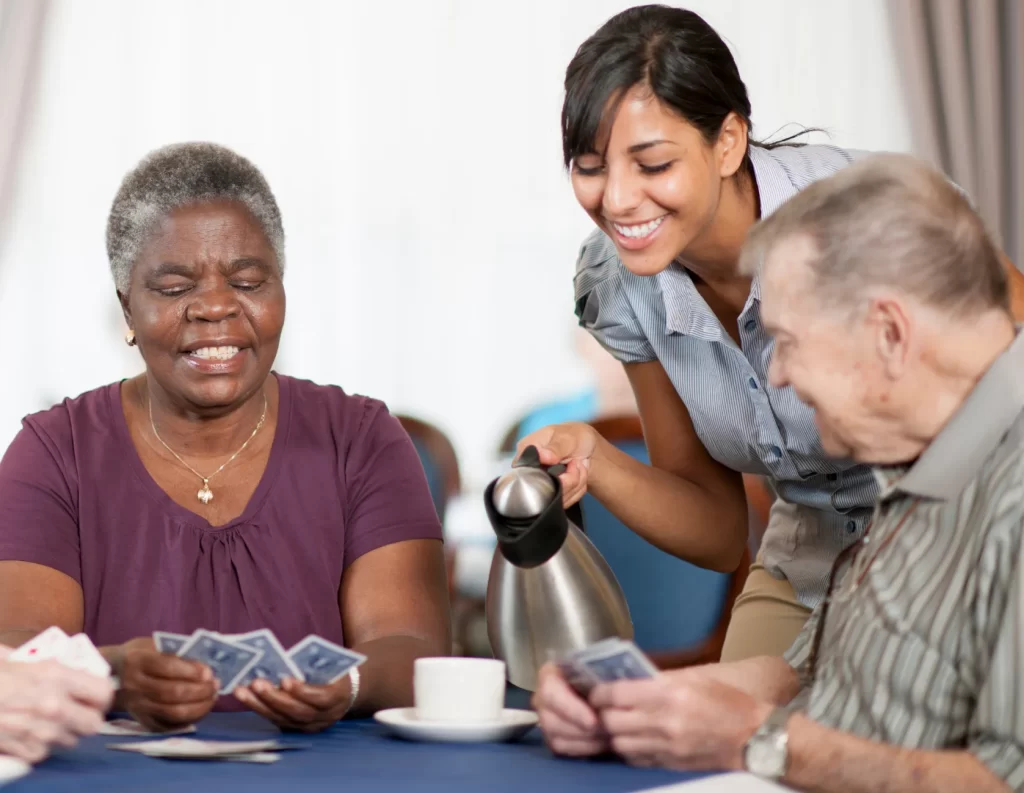
- Hosting a coffee hour
- Leading a familiar prayer or saying grace
Key point: A role can be more engaging than an activity.
Adapting Activities for Success
A person-centered approach means continuously adjusting.
If someone seems frustrated:
- Simplify the task
- Reduce noise/distractions
- Offer a different time of day
- Demonstrate instead of explaining
- Shift to a sensory or movement activity
If someone loses interest quickly:
- Shorten the activity (5-10 minutes is still meaningful)
- Rotate tasks
- Match energy level (active vs. calming)
- Add a social component
If someone says no:
- Respect the answer
- Try again later
- Offer a different choice
- Join them in what they are already doing
Engagement is not one-size-fits-all, and success may look different from day to day.
Language Matters
Person-centered care includes person-centered language.
Helpful language:
- Person living with dementia
- What matters to this person?
- How can we support success?
- What is this behavior communicating?
- Let’s adapt the environment.
Language to avoid:
- Demented
- Behaviors (without context)
- Noncompliant
- Sundowning as a label without assessment
- He/she can’t do anything
Language shapes culture. When teams speak with dignity, they are more likely to deliver dignified care.
Measuring Quality Beyond Participation Counts
A strong activity program is not just about how many activities were offered. It is about outcomes that matter.
Consider tracking:
- Engagement (Did the person participate willingly?)
- Affect (Did the person appear calmer, more connected, more joyful?)
- Distress reduction (Did the activity help reduce anxiety or agitation?)
- Sleep/appetite patterns (Are there benefits after regular engagement?)
- Social connection (More interaction with staff/family/peers?)
- Choice and autonomy (Was the person offered meaningful options?)
This aligns with dementia-capable care: quality should be measured by well-being and lived experience, not just attendance.
How NCCDP Can Help
NCCDP supports organizations, teams, and professionals who want to strengthen person-centered, dementia-capable care in daily practice.
NCCDP can help by providing:
- Dementia education and certification pathways for staff across roles
- Practical training that supports person-centered communication and care approaches
- Montessori-informed and engagement-focused education to help teams move from task-based care to meaningful connection
- Train-the-trainer and organizational learning support to scale best practices
- Resources for culture change so activities are integrated into care, not treated as a separate department function
For many organizations, the biggest shift is helping every team member – from nursing to dining to housekeeping – see themselves as part of engagement. NCCDP’s education helps build that shared mindset and skill set.
Final Thought
The goal of activities in dementia care is not perfection. It is connection.
When we focus on the person’s strengths, preferences, and purpose – and use Montessori-informed, person-centered approaches – we create more moments of comfort, autonomy, and meaning. Those moments matter deeply to people living with dementia, to care partners, and to the teams who support them every day.