


























Dementia care is evolving. While supporting individuals after diagnosis remains essential, research increasingly shows that brain health strategies can improve quality of life, engagement, and overall well-being for people living with dementia.
For professionals working in senior living, home care, healthcare, and community services, integrating brain health into dementia care practice helps shift the focus from decline to maintaining abilities, strengthening engagement, and supporting person-centered care.
Organizations that incorporate brain health principles into their dementia programs often see:
- Higher resident engagement
- Improved staff confidence and communication
- Reduced behavioral distress
- Stronger culture of person-centered care
What Is Brain Health?
Brain health refers to the ability to think, remember, learn, make decisions, and maintain emotional balance. Even when someone is living with dementia, many aspects of brain function can still be supported through lifestyle, environment, and engagement.
Research on brain health consistently highlights several factors that support cognitive function throughout life, including:
- Physical activity
- Social connection
- Cognitive stimulation
- Quality sleep
- Nutrition
- Stress management
- Hearing and vision health
Why Brain Health Matters in Dementia Care
A brain health approach complements person-centered dementia care, which focuses on understanding the individual rather than just the diagnosis.
When care teams integrate brain health principles into their work, they shift from asking ‘How do we manage symptoms?’ to asking ‘How do we support the person’s remaining strengths and abilities?’
Practical Brain Health Strategies for Dementia Care
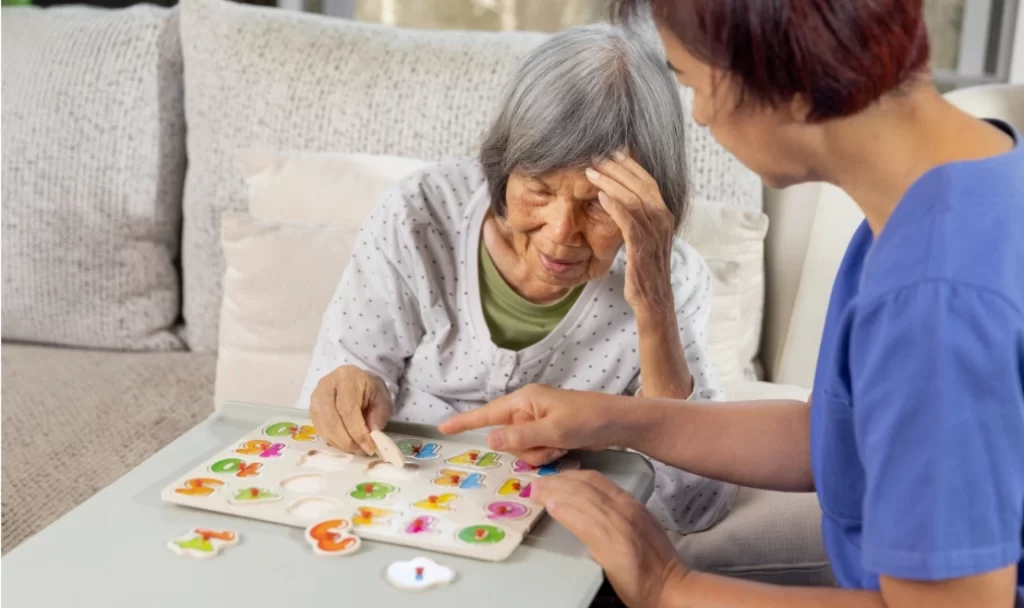
1. Meaningful Engagement
Purposeful activity connected to a person’s life history and interests stimulates cognitive pathways and reinforces identity.
- Examples include:
- Gardening or nature activities
- Music therapy and rhythm-based engagement
- Sorting or organizing tasks
- Art and creative expression
- Reminiscence using photographs or personal objects
2. Physical Movement
Physical activity supports circulation, mood, sleep, and cognitive function. Even small amounts of movement can benefit individuals living with dementia.
- Examples include:
- Walking groups
- Chair exercises
- Dance programs
- Stretching routines
- Purposeful household tasks
3. Social Connection
Social interaction plays a critical role in brain health. Isolation can worsen cognitive decline, while meaningful connection helps maintain emotional and cognitive engagement.
- Examples include:
- Small group activities
- Shared meals
- Intergenerational programs
- Conversation groups
- Peer-led activities
4. Cognitive Stimulation
Structured cognitive engagement supports attention, memory, and problem-solving while creating enjoyable experiences that activate the brain.
5. Sensory Health
Hearing and vision changes are common among older adults and can significantly affect cognition. Supporting sensory health helps individuals stay connected to their surroundings and reduces confusion.
Creating Brain-Healthy Dementia Care Environments
The physical environment also influences brain health. Dementia-capable environments reduce cognitive stress and support independence.
- Examples include:
- Clear signage and visual cues
- Consistent daily routines
- Calm, predictable environments
- Accessible activity materials
- Opportunities for purposeful roles
Staff Education Is Key to Brain Health in Dementia Care
Brain health strategies are most effective when staff understand how and why to implement them. Dementia training helps care teams recognize remaining abilities, interpret behaviors as communication, facilitate engagement, and promote autonomy and dignity.
How NCCDP Supports Brain-Healthy Dementia Care
The National Council of Certified Dementia Practitioners (NCCDP) is dedicated to improving dementia care through professional education, certification, and advocacy.
Through NCCDP programs, professionals learn how to implement person-centered dementia care practices, apply Montessori-informed engagement strategies, understand dementia-related behaviors, and support meaningful activity and quality of life.
NCCDP certifications, including the Certified Dementia Practitioner (CDP®), provide practical education that care teams can apply immediately in real-world care settings.
The Future of Dementia Care Includes Brain Health
By integrating brain health strategies into daily practice, organizations can help individuals living with dementia maintain abilities longer, experience meaningful engagement, strengthen relationships, and improve overall quality of life.
Most importantly, brain health approaches reinforce a fundamental principle of dementia care: people living with dementia still have the ability to connect, engage, and experience purpose.