
























Introduction
Family caregivers are often described as “the backbone” of long-term care—but that phrase can obscure a harder truth: caregiving is also a massive, largely unpaid economic system that runs on personal time, emotional bandwidth, missed work, and out-of-pocket spending. That’s why many advocates refer to caregiving as a hidden economy—because its real costs are frequently absorbed by families, not reflected on invoices.
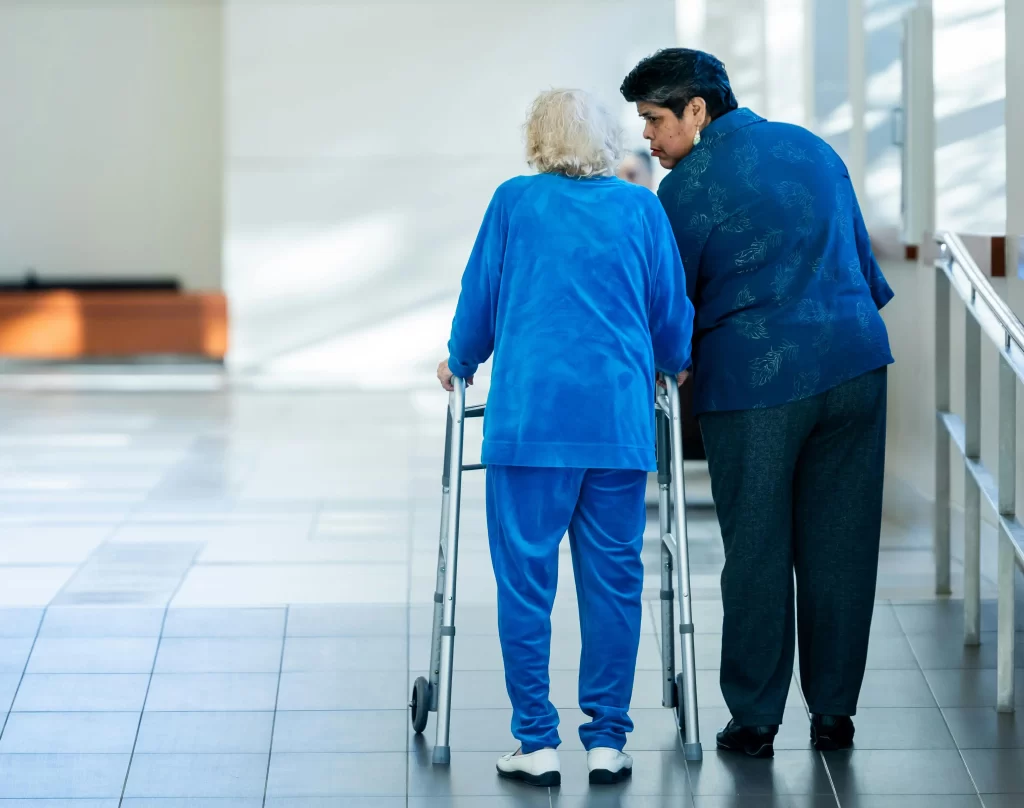
New national data are making that hidden economy harder to ignore. In 2025, AARP reported that nearly one in four U.S. adults is a family caregiver, and caregivers’ own health and finances are increasingly at risk.
For dementia care professionals, this matters for one simple reason: caregiver well-being is care quality. When caregivers are depleted, the risk of medication errors, missed appointments, avoidable hospitalizations, and crisis placements rises—especially when someone is living with Alzheimer’s disease or another dementia.
The Hidden Economy, In Real Numbers (And Real Life)
Unpaid Care Has An Enormous Economic Value
AARP’s Valuing the Invaluable (2023 update) estimated that in 2021, family caregivers provided ~36 billion hours of unpaid care—valued at ~$600 billion. That number isn’t just a statistic. It represents daily tasks like transportation, bathing, meal prep, medication management, and supervision—work that would otherwise require paid services.
Caregiving Costs Show Up In Jobs And Income—Even When No One Calls It “A Bill”
The Caregiving in the U.S. 2025 report (hosted by Caregiving Kinetics) shows that caregiving impacts employment in measurable ways: among employed caregivers, 56% report going in late/leaving early/taking time off; 18% reduced work hours; and 9% gave up working entirely. This is the hidden economy at work: families “pay” through lost wages, stalled careers, and unstable schedules.
Burnout Isn’t A Personal Failure—It’s A Predictable Outcome Of Sustained Strain
One of the most important shifts in the 2025 national research is that it evaluates caregivers’ own health more directly. Key findings include:
- 20% of caregivers rate their health as fair or poor; caregivers who live with the person they support report poorer health than other caregivers.
- Nearly 25% report difficulty caring for themselves because of caregiving.
- Feelings of isolation are common; nearly one in four caregivers report feeling alone (higher than in 2020).
Burnout often looks like: irritability, sleep disruption, “brain fog,” increased conflict with siblings, missed preventive care, or reliance on unhealthy coping strategies. In dementia caregiving, burnout can also show up as reactive communication (short temper, repeated arguing, forced reasoning) because the caregiver is running out of capacity—not compassion.
The Financial Squeeze: Strain, Negative Impacts, And The Affordability Gap
The same report documents caregiving’s financial ripple effects:
- 18% of family caregivers report high financial strain.
- Common negative impacts include using up savings, taking on debt, and paying bills late—and these impacts disproportionately affect African American/Black, Hispanic/Latino, lower-income, and younger caregivers.
- 28% report difficulty finding affordable services (such as meals, transportation, or in-home services), with rural caregivers more likely to report severe difficulty.
In practice, this is why many families delay help until a crisis. They’re not “in denial.” They’re often doing the math—then realizing the math doesn’t work.
The Support Triad That Actually Changes Outcomes: Training + Respite + Navigation
1) Training: Reduce Trial-And-Error And Prevent Avoidable Conflict
Training is not about turning family into “professional caregivers.” It’s about making the hard parts less guessy—especially around communication, behaviors, safety, and daily routines.
What helps most:
- Understanding why dementia-related behaviors happen (unmet needs, overstimulation, pain, fear, confusion)
- Communication tools that reduce escalation (validation, choices, cueing, pacing, nonverbal calm)
- Environmental strategies (lighting, noise, visual cues, simplifying steps)
- Safety planning that protects autonomy (wandering risk, stove safety, driving transitions)
When families get these skills early, they often report fewer “blow-up moments,” less guilt, and better follow-through with care plans.
2) Respite: Make Sustainability Possible (Not Optional)
Respite isn’t a luxury. It’s the difference between a caregiving plan that lasts and one that collapses.
Respite can be:
- Short-term in-home help (a few hours so the caregiver can sleep, shop, or see their doctor)
- Adult day services
- Short-stay respite in a residential setting
- “Micro-respite” routines (protected 30–60 minute blocks several times a week)
A practical reframe for families: respite is risk management. If a caregiver breaks, the whole care plan breaks.
3) Navigation: Reduce Chaos By Creating A “Single Front Door”
Most caregiver stress isn’t just the work—it’s the coordination: appointments, medications, finances, benefits, legal documents, community programs, and sibling communication.
Navigation support includes:
- A clear care roadmap (what to do next, and who does it)
- Help identifying local resources and eligibility (Area Agencies on Aging, respite programs, transportation)
- Planning conversations (values, safety thresholds, when to bring in help, when to consider higher levels of care)
At the national level, caregiver navigation has also been elevated through federal efforts like the National Strategy to Support Family Caregivers, which lays out a roadmap for improving caregiver recognition and support systems.
What Dementia Care Professionals Can Do This Week (Simple, High-Impact Moves)
- Ask one caregiver question at every touchpoint:
- “What part of this is hardest right now—time, money, behaviors, or your own health?”
- Normalize support-seeking:
- “If you’re struggling, that’s information—not failure. Let’s build a plan that’s sustainable.”
- Treat caregiver capacity as a clinical variable:
- If capacity is low, simplify recommendations (fewer steps, fewer changes at once).
- Offer a ‘next two steps’ plan:
- Caregivers are often overwhelmed by long lists. Two steps create momentum.
How NCCDP Can Help Organizations Support Family Caregivers (And Protect Staff, Too)
NCCDP’s training and credentials can strengthen the workforce that caregivers lean on—so families aren’t carrying dementia care alone.
- Alzheimer’s Disease and Dementia Care (ADDC) Seminar: Foundational instruction on dementia, communication strategies, and sensitive approaches to daily activities—skills that directly improve caregiver-family coaching and staff-family collaboration.
- Certified Dementia Practitioner (CDP) Certification: Helps professionals demonstrate comprehensive dementia care knowledge and reinforces consistent standards across teams.
- Certified Alzheimer’s Disease and Dementia Care Trainer (CADDCT): Builds internal training capacity so organizations can scale dementia-capable practices, reduce staff burnout, and deliver consistent education over time.
- Certified Montessori Dementia Care Professional (CMDCP): Supports engagement-focused approaches that can reduce distress for persons living with dementia and lessen caregiver strain by improving daily rhythms and meaningful activity.
When staff are trained to understand behavior, communicate effectively, and build supportive routines, families often experience fewer crises—and fewer crises means less caregiver burnout, fewer emergency placements, and better continuity of care.
Closing Thought
Caregiving is love—but it’s also labor, logistics, and long-term financial exposure. The “hidden economy” becomes visible the moment a caregiver’s health declines, a job is reduced, or a family hits the wall of affordability. The good news is that practical supports—training, respite, and navigation—can transform caregiving from constant emergency response into a plan people can actually live with.
References
- AARP. (2023). Valuing the Invaluable: 2023 Update.
- AARP & National Alliance for Caregiving. (2025). Caregiving in the U.S. 2025 (Research Report). (Hosted by Caregiving Kinetics.)
- Administration for Community Living (ACL). National Strategy to Support Family Caregivers.
- NCCDP. ADDC Seminar; CDP; CADDCT; CMDCP program pages.