



















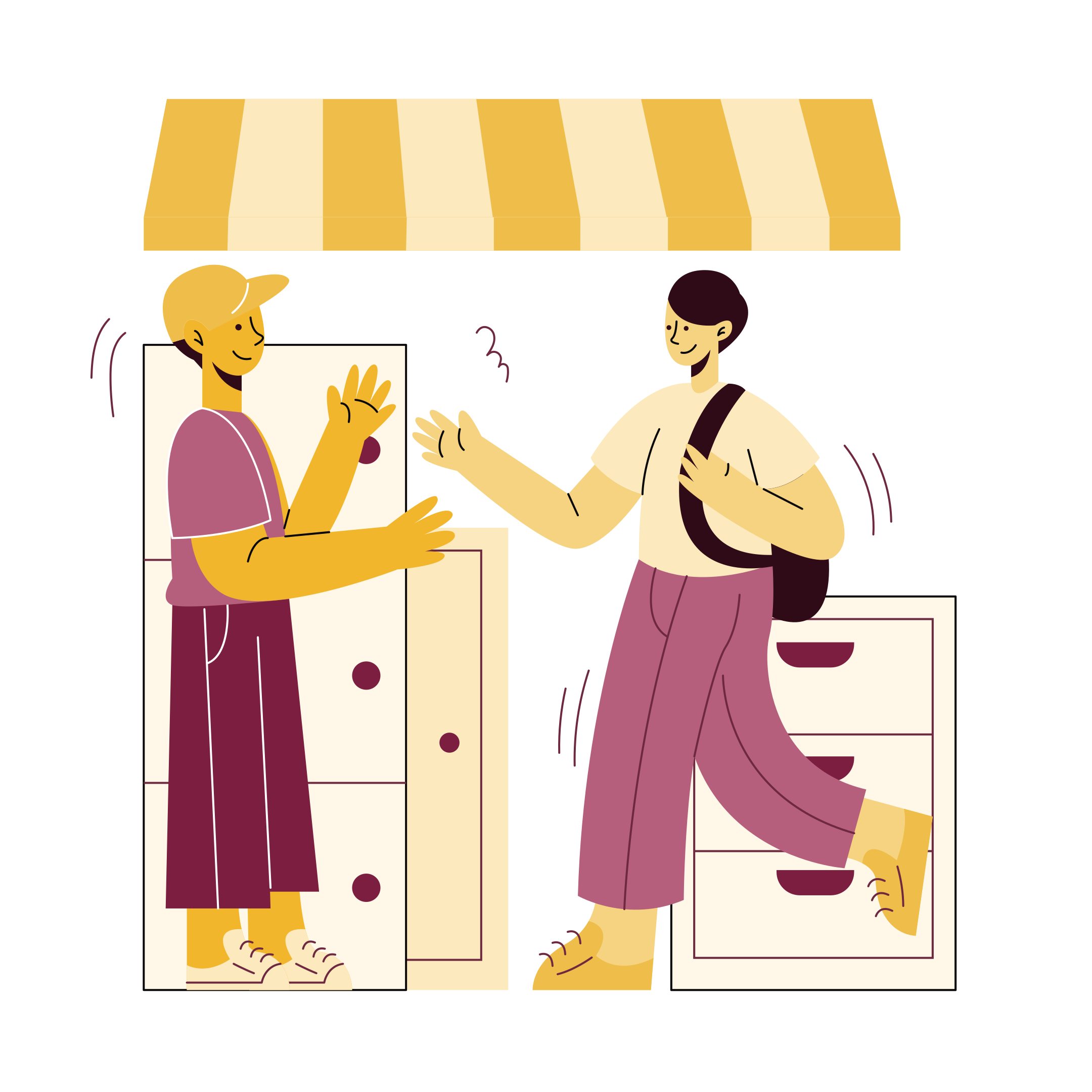






Repetitive expressions—such as asking the same question, retelling the same story, pacing, picking, or rubbing—are not “on purpose.” They’re signals. A person living with dementia is communicating a need, emotion, or discomfort in the best way available to them in that moment. When we respond with curiosity, compassion, and a plan, repetition can become a roadmap to better comfort and care (Alzheimer’s Association, 2023; NCCDP, 2025a).
Why repetition happens: clinical and non-clinical drivers
Unmet physical needs (often silent)
- Pain is common and frequently under-recognized in dementia; it can surface as restlessness, calling out, or repetitive motions. Use a validated tool like PAIC15 (or the short-form PAIC6) to assess nonverbal pain and treat promptly (Kunz et al., 2020; de Vries et al., 2024; Schreiber et al., 2025).
- Skin and wound issues (rashes, shingles, pressure injuries) can drive rubbing or scratching.
- Infections such as UTIs or pneumonia may present atypically in older adults—often as delirium, lethargy, agitation, or new repetitive behaviors rather than fever or cough (Dutta et al., 2022).
- Constipation or urinary retention often trigger tugging at clothing, frequent bathroom requests, or agitation; proactively prevent, assess, and treat (Chen et al., 2020; Cloak & Al Khalili, 2024).
- Metabolic/medical factors (diabetes with hypo/hyperglycemia, thyroid disorders, heart or respiratory disease, dehydration, electrolyte imbalances, B12 deficiency) can impair cognition and increase repetitive expressions (Health Quality Ontario, 2013; Moore et al., 2012).
- Sleep problems (insomnia, sleep apnea) worsen attention, memory, and daytime behaviors; treat sleep disorders and support sleep hygiene (Gosselin et al., 2019; Ercolano et al., 2023).
Brain and sensory changes
- Type and stage of dementia matter. People living with Alzheimer’s may “perseverate” on ideas/questions; those with Lewy body dementia or Parkinson’s disease dementia may show pacing, picking, or motor stereotypies (LBDA, 2020; Cleveland Clinic, 2024; Cipriani et al., 2013).
- Communication and memory changes lead to repeated questions or actions when needs aren’t understood or remembered (Alzheimer’s Association, 2023).
- Hearing and vision impairments increase cognitive load and distress—addressing them reduces behavioral symptoms and improves connection (Livingston et al., 2024).
Emotions and mental health
- Anxiety or depression can drive repetition as a coping strategy; validation and gentle redirection help (NCCDP, 2024a; 2024b).
- OCD features may coexist and need specialized evaluation.
Environment and routine
- Sensory overload (bright lights, noise, clutter) or sensory seeking (touching/rubbing for input) can both lead to repetition. Calibrate the environment and offer safe sensory alternatives (NCCDP, 2025b).
- Transitions (hospital/rehab, a new room, staffing changes) often increase repetition; support orientation with familiar cues and predictable routines (Alzheimer’s Association, 2023).
Medication considerations (always review)
- Anticholinergics (many OTC sleep/allergy/bladder meds) increase confusion, constipation, and retention; minimize per 2023 AGS Beers Criteria (American Geriatrics Society, 2023).
- Psychotropics and sedatives can cause delirium, oversedation, paradoxical agitation, or electrolyte changes—optimize non-pharmacologic care first (AGS, 2023).
- Opioids may worsen sedation, confusion, constipation, and retention—treat pain thoughtfully and prevent bowel complications.
- Tardive dyskinesia (TD) presents as repetitive involuntary movements (e.g., tongue thrusting, facial tics) after exposure to dopamine-blocking drugs; evaluate urgently (MedlinePlus, 2024; Vasan & Sethi, 2023).
A practical, person-centered approach (The “4R” playbook)
- Recognize the signal
Notice what’s repeating (words, questions, motions) and when it happens. Track patterns: time of day, task, people present, noise/light, hunger, bathroom needs, pain cues (NCCDP, 2024c; Alzheimer’s Association, 2023). - Root-cause check (clinical + environmental)
- Screen for pain (PAIC15/PAIC6).
- Check vitals, hydration, bowel/bladder, recent sleep, and acute changes (consider delirium).
- Review meds—especially new starts, dose changes, anticholinergics, sedatives, and antipsychotics (AGS, 2023).
- Confirm glasses and hearing aids are working and used (Livingston et al., 2024).
- Respond with validation and clarity
Use calm, one-step communication in a quiet space; validate feelings first (“You’re worried about your appointment—I would be, too”). Then offer a simple next step or a reassuring cue (note, clock, photo, whiteboard) rather than repeatedly “correcting” (Alzheimer’s Association, 2023; NCCDP, 2024a, 2024d).- If the question repeats, answer once + show a visual cue (calendar card, sticky note on the door).
- If the action repeats (pacing/picking), offer a purposeful alternative: a folded-towel task, fidget blanket, sorting objects, gentle hand massage, music.
- Refine the dementia care plan
- Adjust environment (light, noise, clutter), simplify routines, and schedule engaging, meaningful activities.
- Prevent triggers: regular toileting, hydration, movement, pain plan, and sleep routine.
- Escalate to the healthcare team when repetition is new, escalating, or distressing, or if you suspect delirium, infection, TD, medication effects, or untreated depression/anxiety (AGS, 2014/2023; Dutta et al., 2022).
Communication tips you can use today
- Speak slowly, use short sentences, and allow extra processing time.
- Offer either/or choices and concrete next steps.
- Keep your tone warm; join their reality and reassure before redirecting (Alzheimer’s Association, 2023; NCCDP, 2024a, 2025a).
- Avoid arguing, quizzing, or saying “you already asked me.” Instead: “It matters a lot—let’s look together,” or “We go after lunch; here’s the note on the fridge.”
When repetition is protective
Some repetitive actions are self-soothing and safe. If a behavior isn’t harmful, consider supporting it while ensuring comfort and dignity (Alzheimer’s Association, 2023). If safety is a concern (skin breakdown from scratching, falls from pacing), blend validation with gentle limits and safer alternatives.
Related NCCDP Training
- Alzheimer’s Disease & Dementia Care (ADDC) Seminar – The foundational course for person-centered communication, behavior response, and care planning; it’s the required seminar for those pursuing CDP®. Learn more / register → NCCDP ADDC Seminars.
- Certified Dementia Practitioner® (CDP®) – A credential that recognizes comprehensive dementia-specific education and helps caregivers translate best practices into daily routines. Explore CDP → NCCDP CDP overview.
- Certified Alzheimer’s Disease and Dementia Care Trainer® (CADDCT®) – For professionals who want to train others (including delivering the ADDC content) and scale high-quality, person-centered education across teams and communities. Become a CADDCT → NCCDP Trainer page.
- Certified Montessori Dementia Care Professional® (CMDCP®) – Applies Montessori principles (meaningful roles, sensory engagement, independence) to dementia care; offered via online course or live seminar. Get CMDCP.
- Certified Montessori Dementia Care Professional Trainer® (CMDCPT®) – Prepares you to teach Montessori-based dementia care concepts and mentor teams in hands-on strategies. Train others → CMDCPT page.
- Memory Care Excellence Network (MCEN) – An organization-level program that recognizes communities meeting rigorous, person-centered standards; supports ongoing competency and outcomes. See MCEN.
References:
Alzheimer’s Association. (2023). Communication and Alzheimer’s (Tips sheet). https://www.alz.org/help-support/caregiving/daily-care/communications
Alzheimer’s Association. (n.d.). Repetition. https://www.alz.org/help-support/caregiving/stages-behaviors/repetition
American Geriatrics Society. (2023). American Geriatrics Society 2023 updated AGS Beers Criteria® for potentially inappropriate medication use in older adults. Journal of the American Geriatrics Society, 71(10), 3533–3596. https://doi.org/10.1111/jgs.18372
Chen, C.-L., Chang, C.-C., Wang, P.-S., & Hsu, C.-W. (2020). Constipation and its associated factors among patients with dementia. International Journal of Environmental Research and Public Health, 17(22), 8510. https://doi.org/10.3390/ijerph17228510
Cipriani, G., Lucetti, C., Danti, S., Nuti, A., & Di Fiorino, M. (2013). Repetitive and stereotypic phenomena and dementia. American Journal of Alzheimer’s Disease & Other Dementias®, 28(3), 223–227. https://doi.org/10.1177/1533317513481094
Cleveland Clinic. (2024, July 8). Parkinson’s disease dementia: What it is, symptoms & treatment. https://my.clevelandclinic.org/health/diseases/parkinsons-dementia
Cloak, N., & Al Khalili, Y. (2024). Behavioral and psychological symptoms in dementia. In StatPearls. StatPearls Publishing. https://www.ncbi.nlm.nih.gov/books/NBK551552
de Vries, N. J., de Rooij, A. H. P., & van der Steen, J. T. (2024). Validity and reliability of the Pain Assessment in Impaired Cognition (PAIC15) in persons with aphasia. Journal of Pain Research, 17, 1601–1612. https://pmc.ncbi.nlm.nih.gov/articles/PMC11375870/
Dutta, C., Liaqat, A., & Rahman, S. (2022). Urinary tract infection–induced delirium in elderly patients. Cureus, 14(12), e32725. https://pmc.ncbi.nlm.nih.gov/articles/PMC9827929/
Ercolano, E., Aloia, M. S., & Rizzo, M. (2023). Intricate relationship between obstructive sleep apnea and cognitive impairment. International Journal of Environmental Research and Public Health, 20(23), 7079. https://pmc.ncbi.nlm.nih.gov/articles/PMC10828345/
Health Quality Ontario. (2013). Vitamin B12 and cognitive function: An evidence-based analysis. https://pmc.ncbi.nlm.nih.gov/articles/PMC3874776/
Lewy Body Dementia Association. (2020). Behavioral changes in LBD (Brief). https://www.lbda.org/wp-content/uploads/2020/08/behavioral_changes_in_lbd.pdf
Livingston, G., et al. (2024). Dementia prevention, intervention, and care: 2024 report of the Lancet Commission. The Lancet, 404(10426), 101–160. https://www.thelancet.com/journals/lancet/article/PIIS0140-6736(24)01296-0/abstract
MedlinePlus. (2024, June 13). Tardive dyskinesia. https://medlineplus.gov/ency/article/000685.htm
Moore, E., Mander, A., Ames, D., Carne, R., Sanders, K., & Watters, D. (2012). Cognitive impairment and vitamin B12: A review. International Psychogeriatrics, 24(4), 541–556. https://pubmed.ncbi.nlm.nih.gov/22221769/
NCCDP. (2024a). 5 empathetic strategies for communicating with persons living with dementia. https://www.nccdp.org/5-empathetic-strategies-for-communicating-with-persons-living-with-dementia/
NCCDP. (2024b). The Four R’s of dementia care: A guide for caregivers. https://www.nccdp.org/the-four-rs-of-dementia-care-a-guide-for-caregivers/
NCCDP. (2024c). How to talk to someone with dementia. https://www.nccdp.org/how-to-talk-to-someone-with-dementia/
NCCDP. (2025a). Hallucinations & paranoia in dementia care: What to watch for—and how to respond. https://www.nccdp.org/hallucinations-paranoia-in-dementia-care-what-to-watch-for-and-how-to-respond/
NCCDP. (2025b). Repetitive behavior in elderly individuals with dementia: Causes and calming techniques. https://www.nccdp.org/repetitive-behavior-in-elderly-individuals-with-dementia-causes-and-calming-techniques/
Schreiber, V., et al. (2025). Development and validation of a short version (PAIC6) of the PAIC15. European Journal of Pain. https://paic15.com/wp-content/uploads/European-Journal-of-Pain-2025-PAIC6.pdf
Vasan, S., & Sethi, K. D. (2023). Tardive dyskinesia. In StatPearls. StatPearls Publishing. https://www.ncbi.nlm.nih.gov/books/NBK448207/